

TL;DR
- Traditions like nomikai and seniority still shape the culture.
- Long working hours remain a challenge despite recent declines.
- New overtime caps are actively improving the work life experience.
- Tech and global firms lead the way in work life balance.
- Expats often avoid “presenteeism” due to different cultural expectations.
Japanese job culture has been shaped by long hours and a strong focus on putting the company above personal life. For many years, the idea of the salaryman staying loyal to one firm until retirement set the tone, even when it led to stress and exhaustion. This system, tied to pressure-filled workplaces and unpaid overtime, has made maintaining work-life balance in Japan hard for many workers.
Change is starting to take shape as Japan faces the need to support a lasting workforce. New work-style reform laws and tools, like AI screening for culture fit, are pushing companies to focus on output rather than hours. This move toward future-fit hiring is opening the door to workplaces where career growth and personal life can coexist.
Core Elements of Japan’s Job Culture
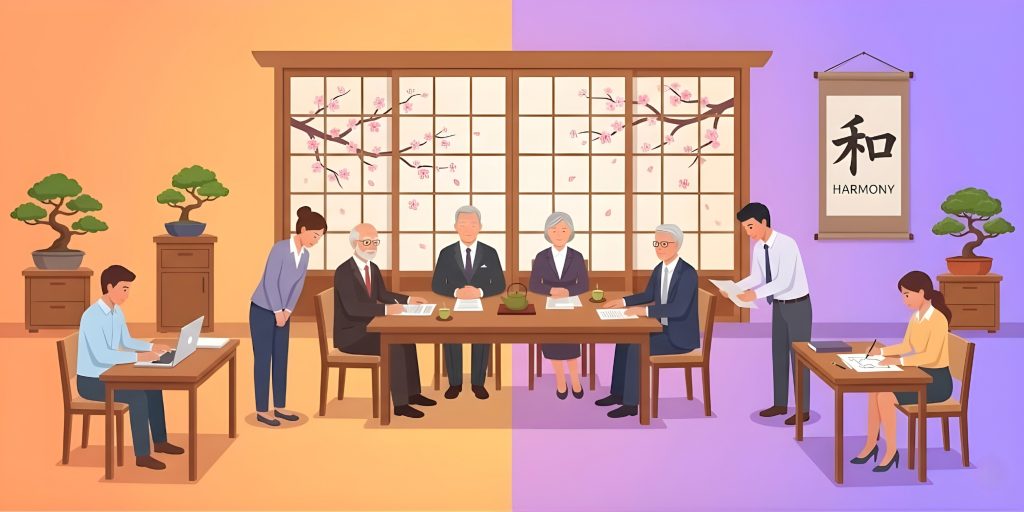
To understand the Japanese culture of work, one must look at the concepts of wa (harmony) and giri (obligation). In a typical Japanese office, maintaining group harmony is often more important than individual achievement. So if you ask, “Why is everything in Japan about hierarchy?”, then here’s an explanation: the seniority-based system (Nenkou Jousetsu) ensures that respect flows upward, and decisions are often made through a slow, consensus-based process called ringi.
A typical work schedule in Japan usually starts at 9:00 AM. However, the day doesn’t end when the clock hits 6:00 PM. The obligation to stay until the boss leaves is a lingering cultural trait. Despite this, companies are being encouraged to stop hiring for cultural fit if that “fit” means only “willingness to work late,” and instead shift toward skills-based evaluation.
Overtime and “Presenteeism” Explained
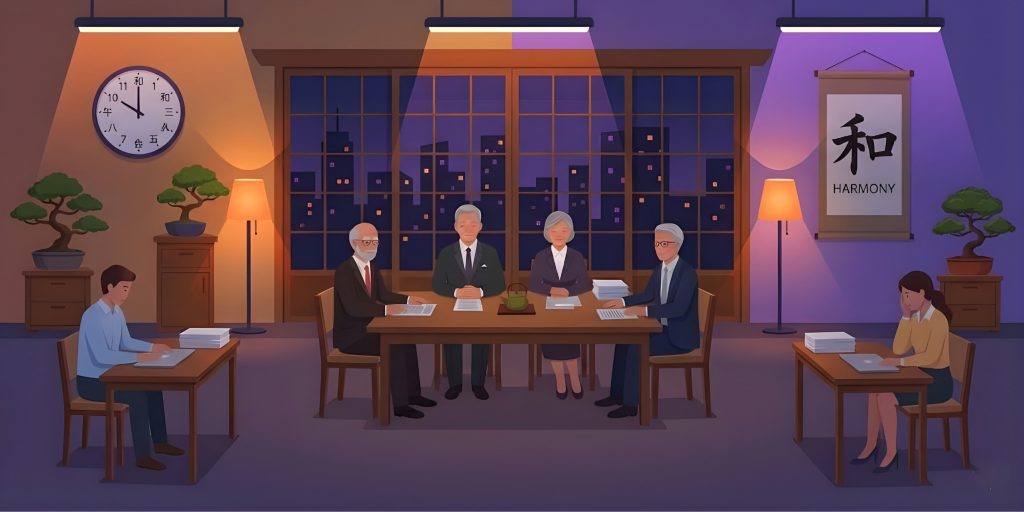
The average work week in Japan has historically been one of the longest in the world. A significant part of this is due to “presenteeism,” the belief that being physically present at your desk is a sign of loyalty, regardless of productivity.
- Average Work Time in Japan: According to data, the average monthly overtime per person has decreased gradually, but more than 10% of full-time employees still work more than 60 hours per week.
- Japanese Work Day Hours: While the standard is 8 hours, it is not uncommon for “service overtime” (unpaid) to extend the day to 12 or 13 hours.
If you are wondering, “How many hours does Japan have in a day for work?”, the legal limit is 40 hours per week. However, “36 Agreements” between unions and management often allow for much higher ceilings, though recent 2024 reforms have placed stricter caps on industries like construction and driving.
Differences by Industry

The Japanese job culture is not the same everywhere, since work life can feel very different depending on the industry you are in.
- Traditional Manufacturing & Banking: These sectors often adhere strictly to old ways, with clear hierarchies and long Japanese workdays.
- IT & Creative Agencies: These are the pioneers of the new Japan work life. Flextime, remote work, and “No Overtime Wednesdays” are becoming standard.
- Foreign-Capital Firms (Gaishikei): Companies like Google or Amazon in Japan tend to mirror Western standards. They focus on output rather than hours spent at the desk.
Is Work-Life Balance Improving in Japan?

Recent figures point to a careful yes. Japan’s Work Style Reform bill, rolled out in 2019, set overtime limits at 45 hours per month and 360 hours per year for most jobs.
According to a survey, more companies are reporting a decrease in total hours worked, and the use of annual paid leave has hit a record high of 62.1%. While the average work time in Japan is still higher than in many European nations, the trend is moving toward a healthier Japan work life balance.
What Expats Experience Differently

For many foreigners, moving into the Japanese job culture can be a “culture shock.” However, expats often have a “buffer.” Because they are seen as outsiders, they are sometimes exempt from the most rigid social obligations, such as staying late for a nomikai or waiting for the manager to leave.
Many foreigners find that the normal work hours in Japan are manageable when working for international companies or startups. These organizations often prioritize diversity and are more likely to adopt flexible policies to attract global talent.
Conclusion
The Japanese job culture is going through a period of change. Old habits around hierarchy and long hours still exist in some offices, but government action and younger workers pushing for flexibility are slowly reshaping the way people work.
Achieving a great Japan work-life balance is no longer a dream; it is becoming a strategic necessity for Japanese firms to survive in a competitive global market. If you are looking to join the Japanese workforce, now is the time to seek out companies that value your time as much as your talent.
FAQs
Do people really work long hours in Japan?
Is work-life balance better for foreigners?
Which industries offer a better balance?