
TL;DR
- Are job fairs worth it? Yes, they can be, but it depends on how you use them.
- Job seekers use them to meet people and move closer to interviews and offers.
- Employers use them to build talent pipelines and brand awareness.
- Both virtual and in-person formats have value.
- Preparation and follow-up are key to success.
Many job seekers and employers pause and wonder: are job fairs worth it when there are online job boards, social media recruiting, and career platforms? You might have stood in a crowded hall, handing out your resume, and asked yourself whether all that time and effort really led to an offer. Or you spent money on a booth hoping to find quality candidates and saw only a trickle of interest.
The good news is that job fairs still serve a purpose when used well. They create direct connections, open doors to interviews and give both sides a chance to make a personal impression. In this blog, you’ll learn what job fairs are, how they help different audiences, and when they work best.
What Is a Job Fair?
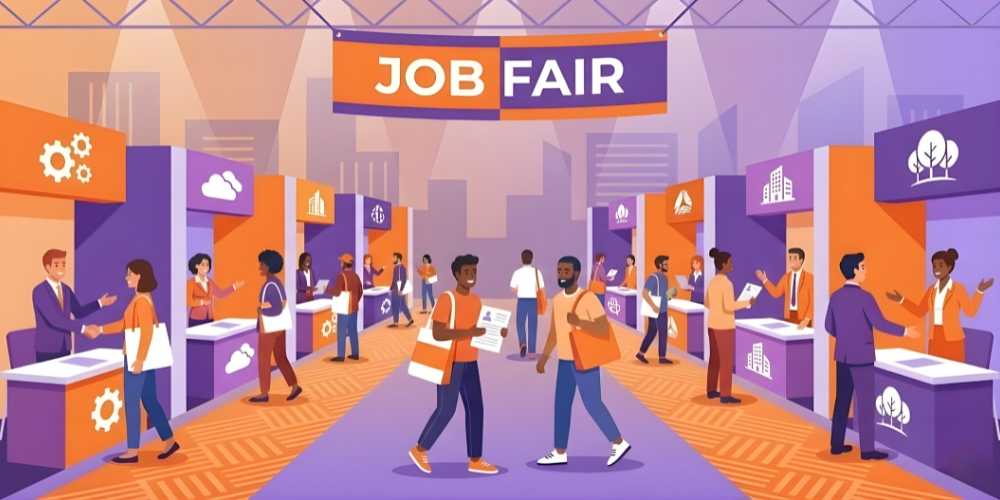
A job fair brings employers and job seekers together to talk about open roles, exchange resumes, and learn about career opportunities. Traditionally, these are in-person events with booths and conversations, but there are also virtual job fairs that take place online, with video chats and digital booths.
These events are often part of career fair for students programs at universities, community employment initiatives, or industry hiring expos. Employers come to meet many candidates at once, while job seekers use the chance to make an impression they can’t get from an online application alone.
Choose the Right Job Fair for You
Who are you?
What level are you targeting?
How do you prefer to attend?
Recommendation
Pick one option in each row to see your recommendation.
Are Job Fairs Worth It for Job Seekers?
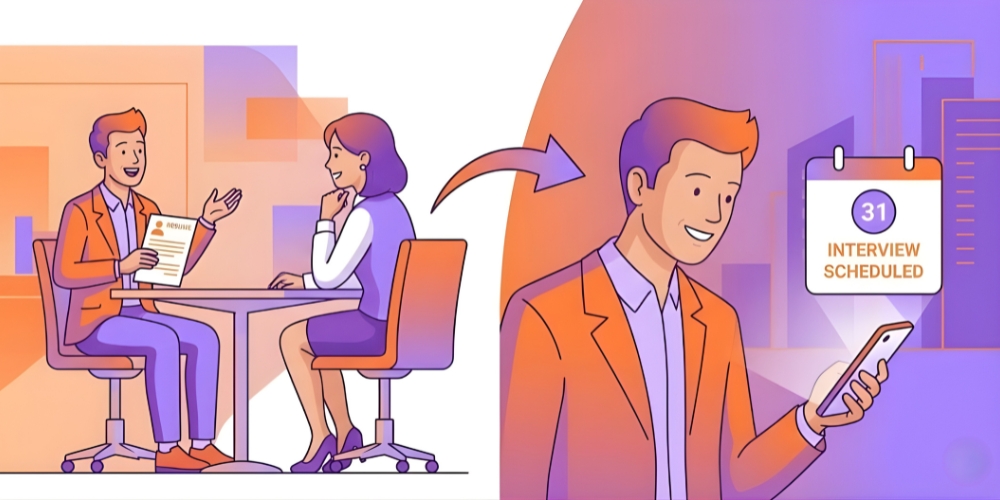
When people ask, are job fairs worth it on Reddit or on other forums, many students and early-career professionals say yes, they help them get interviews and even job offers. In a 2024 student survey, more than half of students reported attending a career fair in the past year, and nearly one quarter received a job offer after the event.
Job fairs work well when your goal is to:
- Meet new professional contacts in a short time.
- Get comfortable introducing yourself face-to-face.
- Find jobs you might not see online.
- Get feedback directly from recruiters.
That said, they are not magical. You still need to prepare a strong resume, know resume buzzwords to avoid, and present yourself well. For some people, if you go without a plan, the result can feel like a are job fairs a waste of time moment. The key is preparation and strategy around where and how you attend.
Job Fair Readiness Quiz
Answer 6 quick questions to see if a job fair is worth your time right now.
0 of 6 answered
Your Result
Answer all questions to unlock your result.
Are Job Fairs Worth It for Employers?
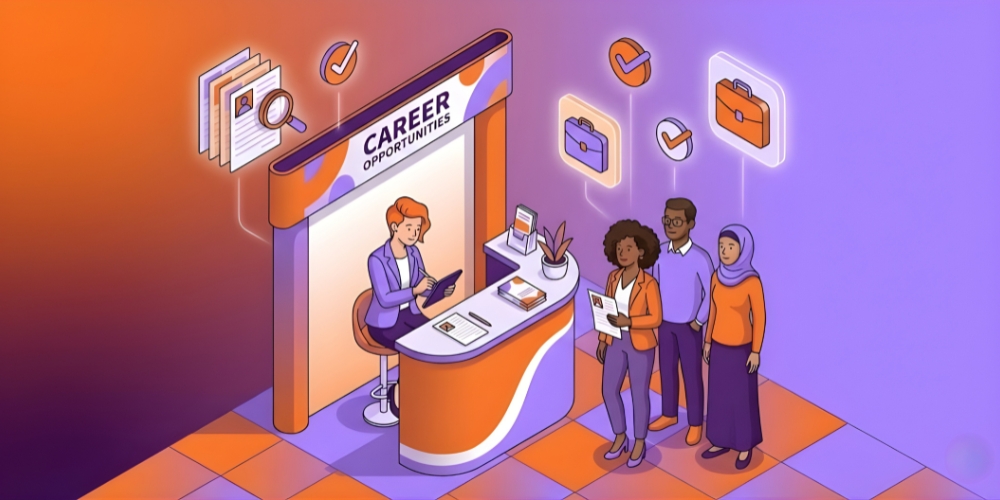
Employers also ask, are job fairs worth it for employers because there is a cost and time tied up in setting up a booth or virtual space? The answer depends on your goals. Job fairs help companies:
- Meet a large number of candidates in one setting.
- Increase brand visibility among job seekers.
- Strengthen local or student talent pipelines.
Research shows that most organizations still host in-person career fairs because they believe the face-to-face interaction is valuable. In a 2024 survey, nearly 94 percent of institutions planned to hold in-person career fairs for the academic year, while one-third planned virtual options.
Hiring outcomes from job fairs vary widely based on the event and the industry. Companies still use them to attract interns and early career candidates, especially when competition for talent is intense. When there is no clear plan or follow-up, costs add up quickly, and little comes from it, which is why preparation matters.
Job Fair ROI Reality Check
Pick one option in each row. You will get a plain-language recommendation.
Hiring volume needs
Role seniority
Location reach
Brand awareness goal
Recommendation
Choose one option in each row to see your result.
When Job Fairs Work Best
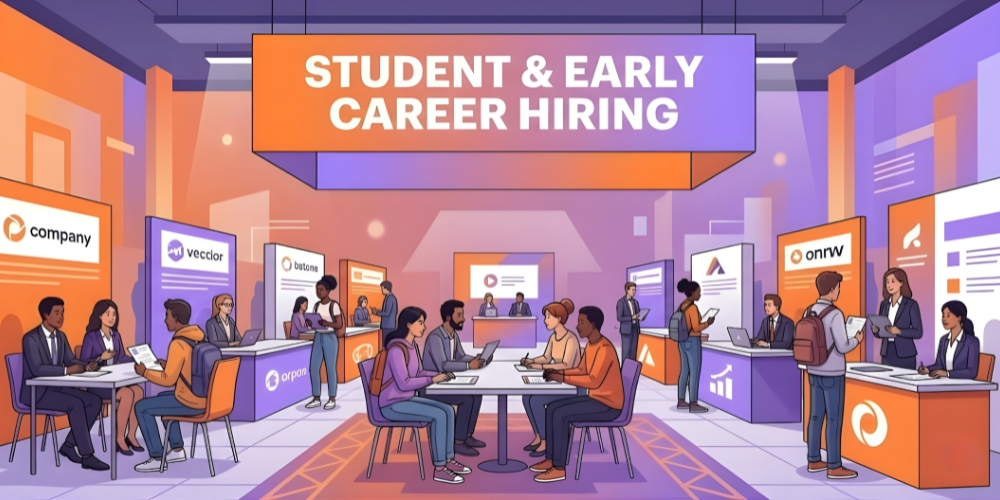
Job fairs tend to work when the right people show up on both sides. University events and local industry fairs usually do better because everyone already knows what kind of roles are on the table. A student career fair that focuses on internships or entry level jobs gives candidates a real chance to talk with recruiters who are actually there to hire.
They also shine when companies are hiring in volume. Roles in retail, healthcare, customer support and early-career programs benefit most from face-to-face conversations. Events tied to a specific theme, such as tech, healthcare, or a work from home job fair, usually see stronger engagement because job seekers know what to expect.
For job seekers, job fairs work best when you arrive prepared. That means researching employers, knowing how to explain your value clearly and understanding the difference between a good resume and a bad one before handing anything over. Walking in blind is where most people go wrong.
Scenario Match Puzzle
Match each scenario to the best recruiting method. Then check your answers.
Scenario 1
A university wants to place interns fast for the upcoming semester. Most roles are entry level.
Scenario 2
A remote support team is hiring across multiple cities and wants to meet candidates without travel.
Scenario 3
A niche software role needs a very specific skill set. The talent pool is small and scattered.
Scenario 4
A team needs one trusted hire fast. Culture fit matters, and the manager wants a strong signal.
Score
Pick an answer for each scenario, then hit “Check answers”.
When Job Fairs Are Less Effective
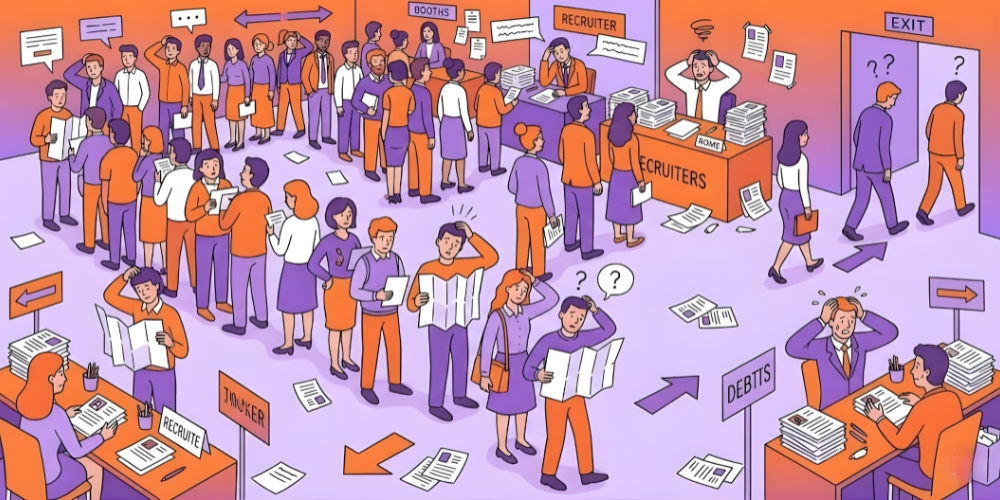
Job fairs struggle without focus. Significant open events with hundreds of employers and no clear audience can feel overwhelming for candidates and unproductive for recruiters.
Job fairs are not always the right fit for senior or highly specialized roles. These positions usually need deeper evaluation than a short conversation allows. When employers look for quick hires and do not plan next steps, the experience can feel unproductive and lead them to question are job fairs a waste of time.
For job seekers, attending without a goal or preparation turns the event into a walk around the room rather than a career move. Without preparation and tips for job fair planning, the value drops quickly.
Red Flag Spotting Exercise
Read the event description. Select the 4 red flags. Then check your answers.
Fictional Job Fair Description
Join our Mega Opportunity Hiring Expo. We have many companies attending across all industries. Roles will be shared at the event. Bring your resume and visit as many booths as possible. Recruiters will collect resumes and may reach out later. There is no set interview schedule. Come by anytime during the day. A short “how to prepare” guide will be emailed the night before.
Pick the 4 red flags
Result
Select exactly 4 options, then click “Check answers”.
Job Fairs vs. Modern Digital Recruiting
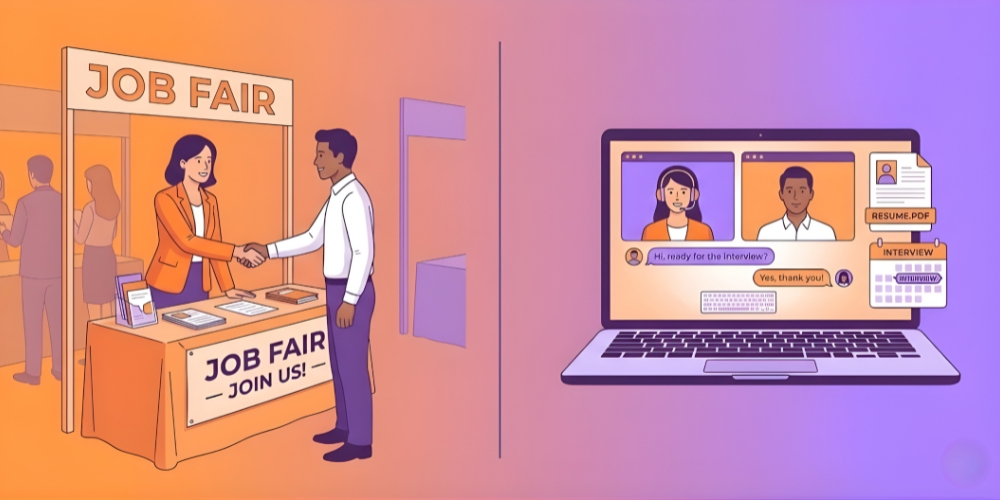
Modern recruiting tools have changed how hiring works. Online platforms, social recruiting, and best hiring event platforms allow employers to reach global talent faster. This leads many to ask, are virtual job fairs worth it compared to in-person events?
Digital recruiting is efficient and measurable. It works well for screening, scheduling and remote hiring. Virtual fairs remove travel barriers and are especially useful for distributed teams and remote roles. Many career fair business events now combine the two formats to achieve the best results.
People still value job fairs because they allow direct interaction. Talking to someone in person, even briefly, feels more genuine than submitting a form online. Many hiring teams now use job fairs to make first contact, then switch to digital tools to handle the rest of the process.
Drag and Drop Comparison Builder
Drag each hiring goal into the best column. Then click “Get recommendation”.
Hiring goals
Tip. Drag a goal into a column. Drag it back to remove it.
Job fair
0Drop goals here
Digital recruiting
0Drop goals here
Recommendation
Drag goals into the columns, then click “Get recommendation”.
How Employers Can Maximize Job Fair ROI
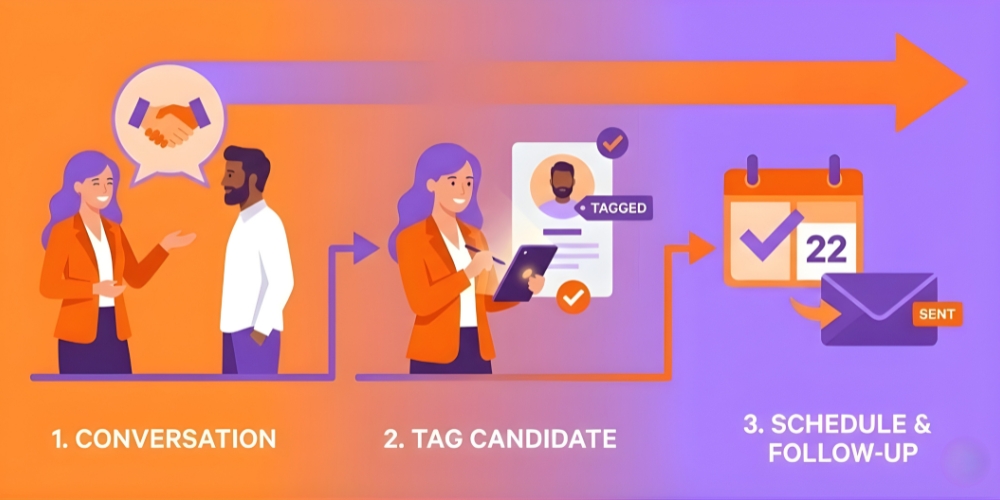
To get real value, employers need a plan before, during, and after the event.
Before the event, decide what you want to achieve. This could be increasing brand visibility, collecting resumes or scheduling interviews. Booth staff should be prepared to speak clearly and stay on message. They also need to understand how to choose the right recruiter for your job so candidates feel supported rather than pressured.
During the event, focus on conversations, not giveaways. Ask structured questions, tag strong candidates, and set expectations for next steps. Avoid vague promises.
After the fair, follow up fast. This is where most value is won or lost. Send personalized messages, schedule interviews quickly, and keep momentum going. Employers who treat job fairs as the first step of a process see far better returns.
Post Fair Action Planner
Fill these three fields. You will get a simple next 48 hours checklist.
Candidates met
How many people you spoke to or scanned.
Interview slots available
Total slots you can offer in the next week.
Follow up timeline
Pick what you can realistically deliver.
Next 48 hours plan
Add your inputs, then click “Generate plan”.
Conclusion
So, are job fairs worth it? They can be, if they are used the right way. They are not quick fixes, but they do help people connect, get noticed, and start real conversations. Job seekers often find opportunities they would not reach through online applications alone. Employers also benefit when job fairs are followed by thoughtful and timely follow-up.
What matters most is being intentional. Pick events that fit your goals, prepare ahead of time and see job fairs as one piece of your hiring approach rather than a single day solution.
FAQs
Click a question to open the answer.
By setting clear goals, training booth staff, having honest conversations, and following up quickly after the event.
Yes. Employers often make direct hires or invite candidates to interviews, especially for entry level and high volume positions.
They can be. Virtual events work well for remote roles, wider reach, and early screening when paired with strong follow up.
Use structured notes, prioritize strong candidates, and send timely, personal follow ups that clearly explain next steps.