

TL;DR
- Recruitment in the public sector follows structured and rule-based hiring.
- It differs from private hiring in speed, transparency and accountability.
- Principles include fairness, merit and legal compliance.
- Hiring timelines are longer and talent pools are smaller.
- Success depends on clear criteria and strong communication with candidates.
Hiring people for government and public service roles often feels slow, complex and confusing. Many job seekers and hiring teams struggle to understand how recruitment in public sector works compared with private organizations. This can lead to frustration, missed opportunities and weaker team outcomes.
This blog will break down how public sector recruitment works in practice and how it differs from private hiring. It also covers the principles behind these processes and the challenges that often appear. You will get a better understanding of what shapes public hiring and how to approach it more effectively after reading this article.
What Is Public Sector Recruitment?
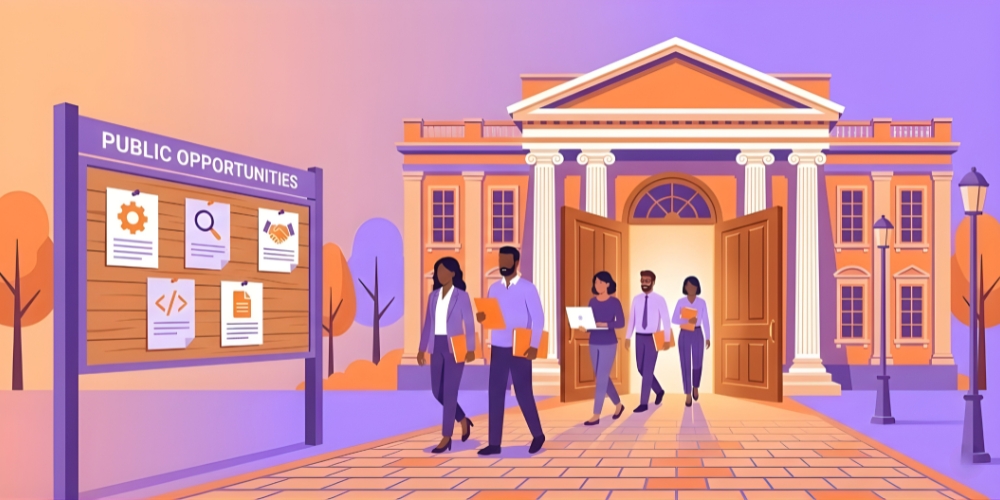
Public sector recruitment is the process of finding, assessing and hiring talent for government departments, public institutions and state-funded organizations. This includes everything from local government roles to national agencies. The goal is to fill positions that serve the public interest with qualified, dependable people.
Unlike private companies that might take a flexible approach, public sector hiring must follow laws, equal opportunity standards and sometimes union agreements. In the United States, the federal government employed just over 3 million people in November 2024 (this includes the United States Postal Service but not active-duty military), which is one reason public hiring relies on structured, merit-based rules that can stand up to scrutiny at scale.
A key part of this process is recruitment screening to fairly and accurately evaluate who should move forward at each step.
Public Sector or Private Hiring? Quick Quiz
Pick what fits best. You will get instant feedback after each choice.
The role must be posted on an official portal for a fixed number of days before interviews can start.
A manager finds a strong candidate and makes an offer within two days, with minimal approvals.
Hiring decisions must be documented and could be reviewed later to confirm fairness.
The team prioritizes fast hiring and adjusts the interview process on the fly to move quicker.
Candidates are scored using the same rubric, and the same questions are used for everyone.
A candidate is chosen partly because they match the team culture, even though criteria were flexible.
The final offer can only be made after clearance checks and formal sign-off from multiple stakeholders.
The company uses a referral and moves the person straight to a final interview to save time.
How Public Sector Recruitment Differs From Private Hiring
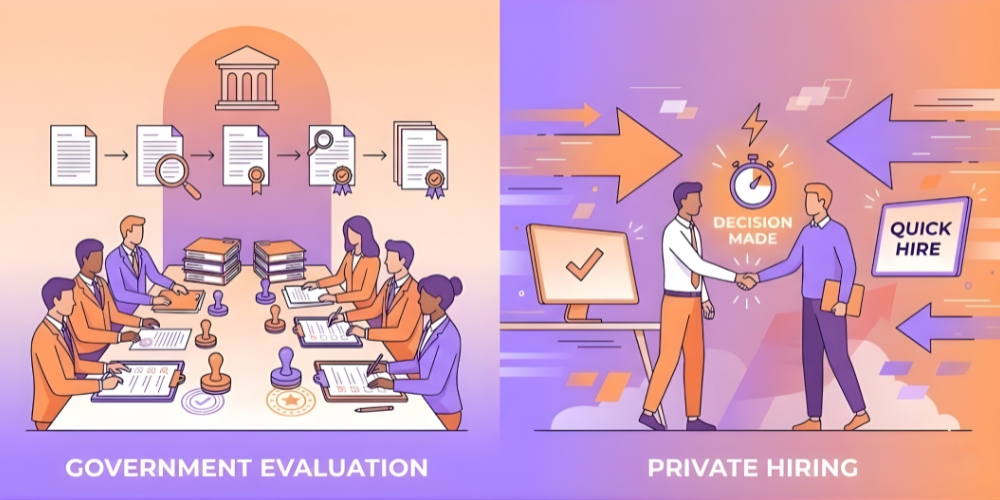
Understanding the difference between public and private hiring is vital for both job seekers and employers.
Structured Process and Rules
Public sector unit recruitment typically follows strict procedures. Job postings, candidate evaluation, interviews and offers are all governed by clear policies. For example, roles may require public posting for a set number of days before interviews begin.
In contrast, private companies often set their own timelines and may move faster when they find the right candidate.
Focus on Fairness and Accountability
Public sector hiring has to show fairness to the public. Decisions are recorded and can be reviewed at any time. Private companies have more room to focus on culture fit or internal priorities when making their choices.
Different Priorities
Private employers may focus on hiring quickly or staying competitive. Public sector recruiting works differently. It puts more weight on legal compliance, transparency and meeting local government talent needs instead of growing teams at a rapid pace.
Public vs Private Hiring: Switch Perspective
You are viewing the public sector lens. Flip the switch to see how private hiring handles the same thing.
Key Principles of Public Sector Recruitment
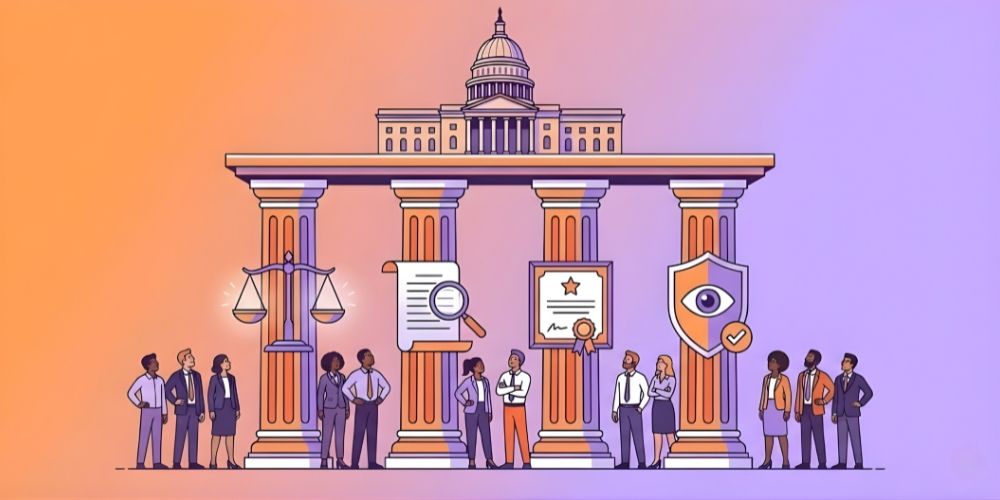
Successful public hiring rests on a few core principles:
Fairness
Every candidate should have an equal chance. Job requirements and selection criteria are published and strictly followed.
Merit and Qualifications
Candidates are chosen based on relevant skills, experience and clear role requirements.
Transparency
Processes and decisions are open to review. This strengthens public trust and reduces disputes.
Consistency
Every candidate is assessed against the same criteria. Tools like public sector recruitment software are used to help standardize steps across open jobs.
Legal Compliance
Hiring follows laws governing employment, data protection and anti-discrimination. This is why many agencies rely on public sector recruitment firms to ensure processes meet regulatory requirements.
Common Challenges in Public Sector Recruitment
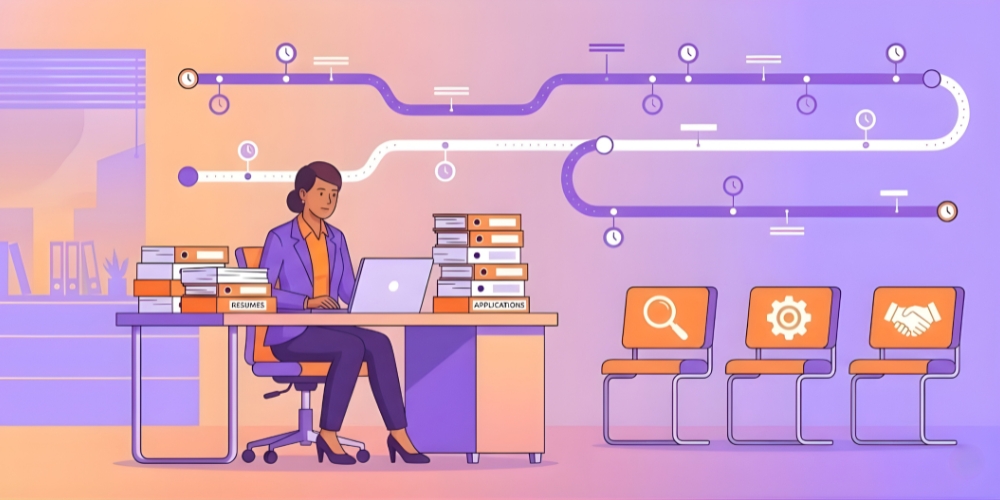
Even with strong principles, hiring in the public sector has some widely recognized challenges:
Slow Timelines
Long review and approval cycles slow down hiring. For example, Office of Personnel Management data shows the government-wide federal time to hire averaged about 101 days in fiscal year 2024. It was measured from the hiring manager validating the need to the new hire’s first day on the job.
Limited Talent Pools
Because pay scales and flexibility can be lower than in private industry. This makes attracting specialized talent like data analysts and engineers harder.
Administrative Burden
Detailed paperwork, audit records and compliance checks increase the workload for HR teams.
Perception Issues
Some candidates assume public hiring is outdated or inflexible. This misconception can discourage strong applicants early in the process.
Addressing these challenges requires clear communication, improved processes and the right support from public sector recruitment agencies and tools.
What Is Slowing Your Hiring?
Tick what is happening right now. You will get a quick diagnosis and a next step.
How Recruitment in the Public Sector Works (Step-by-Step)
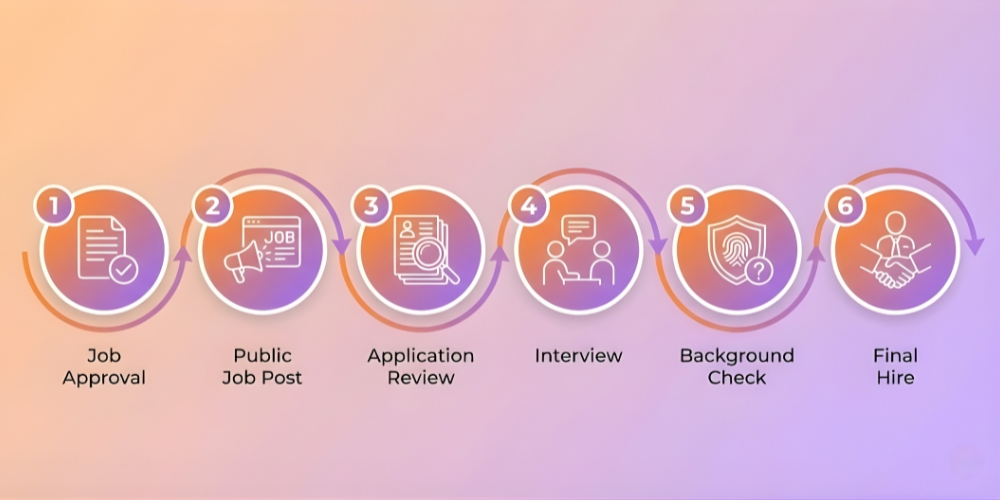
Recruitment in the public sector process is designed to be consistent and easy to audit. The steps may vary by country or agency, but most follow a similar path.
Role approval and workforce planning
Before a job is posted, departments confirm budgets, headcount and workforce needs. This step ensures hiring aligns with public priorities and spending rules.
Job posting and public notice
Roles are advertised publicly to ensure open access. This may include government portals, civil service boards or approved public sector recruitment companies that support outreach.
Application review and shortlisting
Applications are reviewed against fixed criteria. This stage focuses on qualifications, experience and eligibility rather than personal referrals.
Assessments and interviews
Structured interviews and assessments are used to keep evaluations consistent. These recruitment methods help reduce subjectivity and ensure that candidates are compared fairly.
Background checks and approvals
Final candidates go through compliance checks, references and approvals. Only after this is a formal offer made.
Role of Talent Assessment in Public Hiring
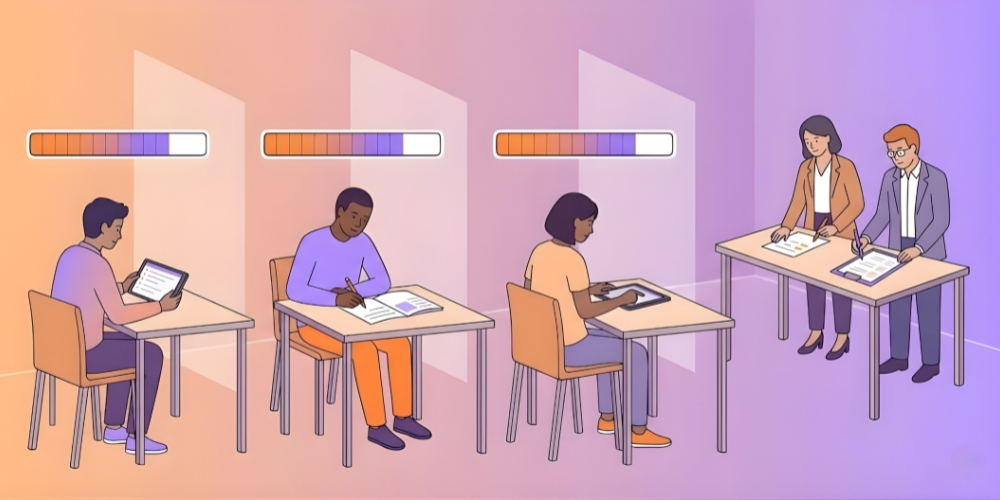
Talent assessment plays a growing role in modern public hiring. Instead of relying only on resumes, agencies now evaluate skills, judgment and job readiness.
Assessments help hiring teams:
- Compare candidates using the same standards
- Reduce bias caused by unstructured interviews
- Identify candidates who can perform the role from day one
The OECD explains that a skills first approach can broaden talent pools and improve job matching when skills are measured in a clear, consistent way with safeguards for fairness.
Many agencies also work with public sector recruitment firms that specialize in assessment design, scoring and compliance. This support helps strengthen hiring decisions while meeting legal requirements.
Bias Spotting Puzzle: Where Is the Bias Hiding?
Read each evaluation note. Spot the bias risk. Then reveal the answer.
“Candidate A feels like a great culture fit. They remind me of the people who already do well here. I would move them forward even though their written test score was average.”
“Candidate B did not speak confidently in the panel interview. They seemed quiet. I do not think they can lead projects, even though their work sample was one of the strongest.”
“Candidate C has a gap in their work history. I am worried they will not be reliable. It is safer to choose Candidate D since their timeline looks cleaner.”
Can AI Be Used in Recruitment in the Public Sector?
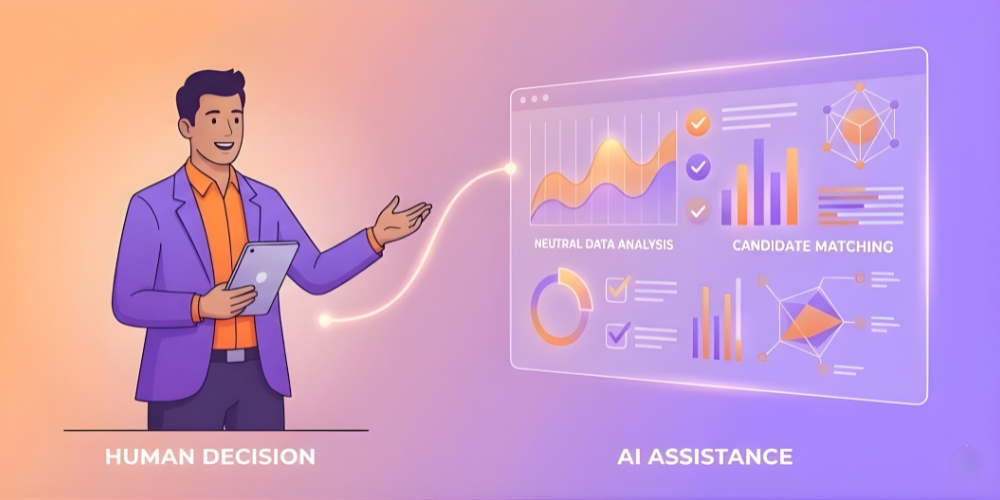
Yes, AI can be used in recruitment in the public sector, but only within strict guidelines.
Governments around the world are testing AI recruitment tools for tasks such as:
- Resume sorting based on role criteria
- Scheduling interviews
- Managing large applicant volumes
The key difference is oversight. AI is used to support decisions, not replace human judgment.
When used responsibly, AI helps hiring teams focus more on people and less on paperwork.
Yes, No, or Depends: Can AI Do This Hiring Task?
Pick your answer for each task. Then reveal the governance-friendly answer and why.
How AI Supports Fair Public Hiring
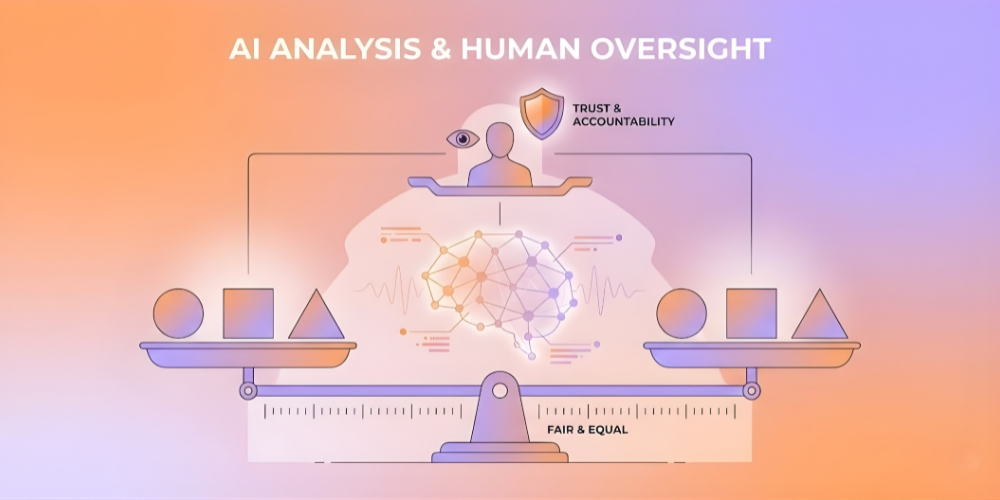
AI can help support fairness when it is handled with care. Every application is reviewed using the same set of rules during early screening. This reduces differences that can happen when people are tired or rushed after long hours of reviewing files.
AI also makes record keeping easier. When decisions are tracked automatically, then teams can clearly explain why a choice was made if concerns are raised later. This level of clarity builds trust in the process.
Another benefit is speed. When thousands of people apply for a small number of roles, then AI helps manage the workload without missing key details.
Fairness Impact Simulator: Where Bias Creeps In
Move the sliders. Watch how workload and volume push risk up. See where AI adds consistency without taking over.
This shows when bias tends to increase and when AI helps add consistency.
Conclusion
Public hiring is meant to serve people, not rush decisions. The steps are clear and the rules exist for a reason. While it can feel slower than private hiring, that slower pace helps keep the process fair and earns public trust over time.
When assessments are improved, technology is used carefully and experienced public sector recruiters are involved, results get better without losing honesty. The goal of public hiring is not to move fast. It is to make the right choice and stand by it.
FAQs
Public hiring goes through many checks before a decision is made. There are sign offs, legal reviews and careful reading of each case. All of this exists to keep choices fair and to handle public money with care.
Yes. AI can help with tasks like screening applications, setting up interviews and managing data when clear rules are in place and people stay involved in the process.
Clear criteria, equal access to jobs, consistent evaluation methods and documented decisions all help ensure fairness in public hiring.