
TL;DR
- Conversational AI recruiting helps teams reply faster and hire smarter.
- Chatbots save time on screening and scheduling.
- They improve reach but still need human judgment.
- Smart use brings speed without losing the human touch.
Hiring today feels messy. Recruiters juggle too many resumes, slow replies and candidates who drop off because no one gets back to them in time. In that gap, good talent walks away. This is where conversational AI recruiting quietly steps in, changing how first conversations happen.
These tools do not replace people. They handle early talks, simple questions and screening so recruiters can focus on real conversations that matter later in the hiring journey.
What Are Conversational AI Recruiting Chatbots
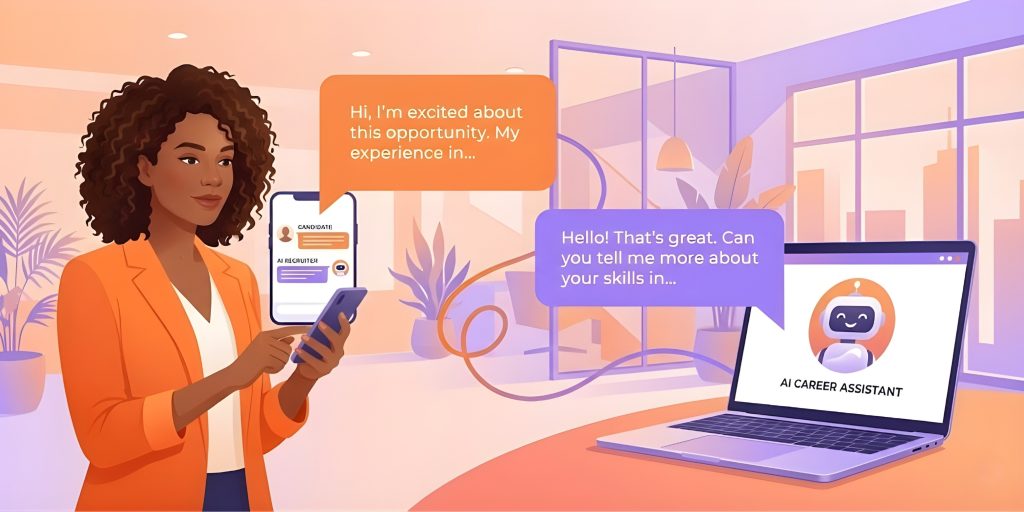
Conversational AI recruiting chatbots are digital assistants that chat with job seekers in real time. They help answer common questions, gather basic information and support candidates as they move through the early stages of hiring. Over time, these tools adapt to how people communicate and respond in more natural ways.
Think of them as a support hand that is always available. Job seekers can apply late at night and still receive clear responses. At the same time, recruiters collect the right details without spending hours following up over email.
Many teams now use conversational AI for HR tasks that go beyond hiring. These tools help with onboarding, policy questions, and day to day employee support. As a result, conversational AI in HR has become more common across different industries.
In fact, 52% of hiring teams now use recruiting chatbots and texting platforms to cut screening time and reduce cost per hire, indicating how widely these tools have taken root in real hiring workflows.
Spot the Chatbot Moment
Click the step where a recruiting chatbot adds the most value.
Pick one option above.
Why Recruiters Are Adopting Chatbots
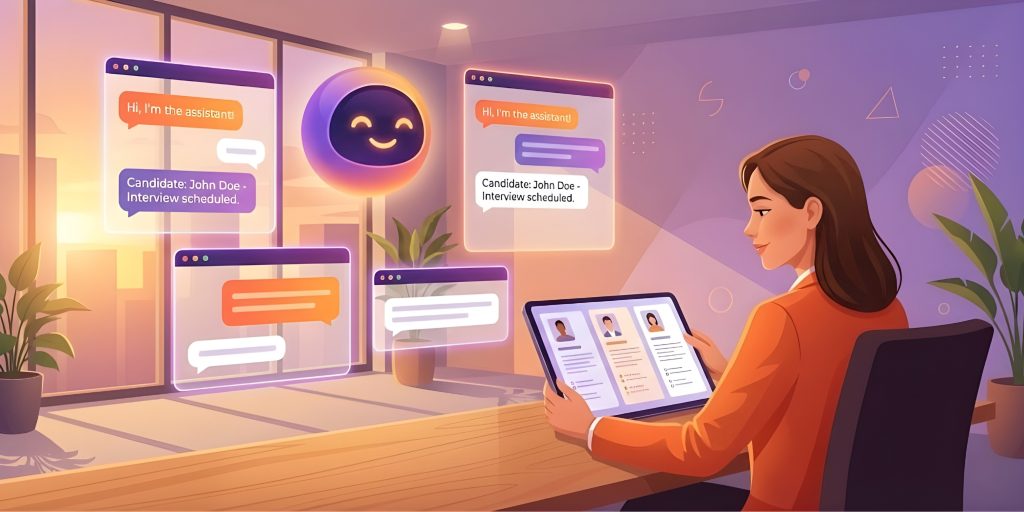
Recruiters turn to chatbots mainly because their time is stretched thin. Reviewing resumes and replying to the same questions again and again can take up most of the week. Chatbots step in to handle those early conversations so recruiters can focus on work that needs their attention.
These tools also make it easier to handle growth. A single chatbot can respond to a large number of candidates at the same time, which is something no hiring team could do manually. It changes how quickly teams can move.
Candidate habits play a role, too, as people expect quick responses and clear next steps. That expectation is why conversational AI HR support has become a practical need for fast growing teams, not just a nice add on.
Recruiter Time Drain Calculator
Estimate how many hours get eaten by repeat questions each week.
Weekly time spent on repeat questions 0 hours
Estimated time you could save (40% reduction) 0 hours
Assumption: a chatbot can reduce repetitive Q&A time by about 40% when FAQs and handoffs are set up well. Adjust your inputs to match your reality.
What Conversational AI Recruiting Chatbots Do Well
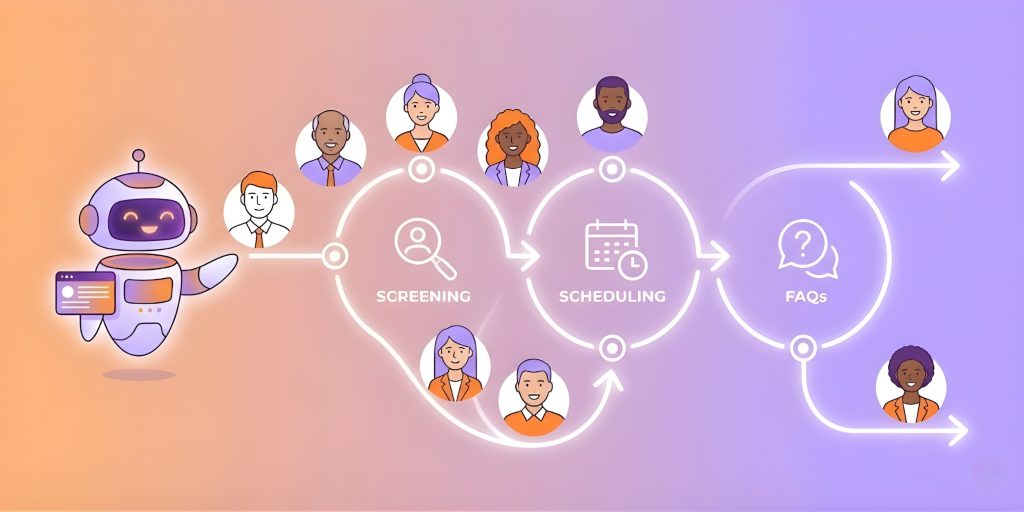
Chatbots are mainly used at the start of hiring. They handle the first questions, share basic job info and help with interview timing. That takes pressure off recruiters and keeps candidates from stalling early.
They also help standardize screening. When every candidate gets the same questions, hiring teams reduce noise early on. Some platforms even connect chatbots with AI tools for talent assessment to flag role fit faster.
Chatbots are also better at collecting clean information. Short answers are easier to work with than long resumes. That same data can later be used for AI assisted cognitive testing, without extra cleanup.
Companies also see gains in engagement. Chatbots used as a chatbot for employee engagement often see higher response rates than email or portals. These results highlight the real benefits of conversational AI when used with care.
Capability Sorting Challenge
Sort each task into where it fits best. Tap a card to cycle categories.
Where Conversational AI Recruiting Falls Short
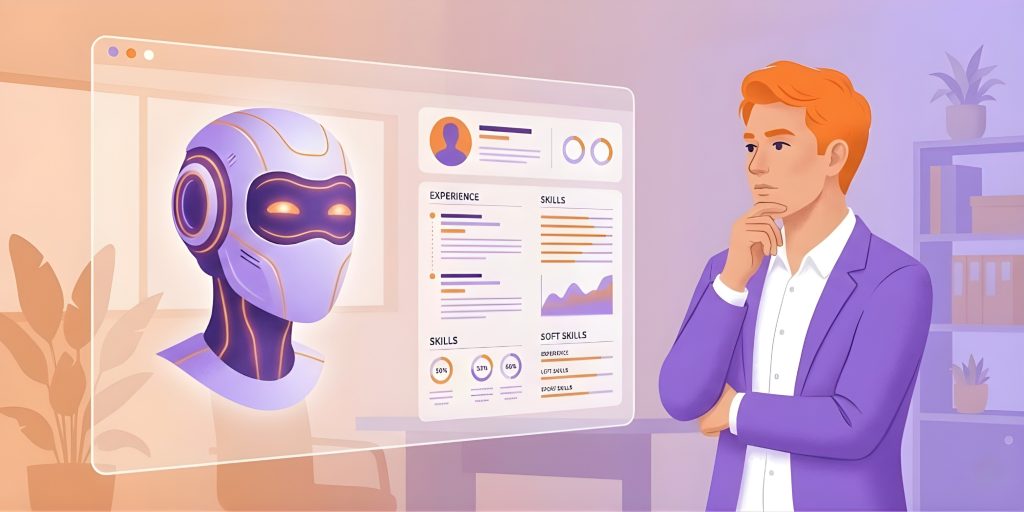
Chatbots are fast but not perfect. They struggle with nuance. Career gaps, complex skills and personal context still need a human eye.
When chatbots are not designed with care, then they can come across as distant or stiff. Candidates may feel brushed off when replies sound generic or overly rehearsed. That is why the way a chatbot speaks matters just as much as what it can do.
Bias is another concern. If training data is flawe,d then chatbots can repeat old patterns. Responsible teams now focus on inclusive language in AI recruiting software to reduce this risk. This work takes effort and ongoing review.
Finally, not all tools are equal. Choosing from the best HR chatbots means checking transparency, data handling and human oversight. This is where awareness of conversational AI trends helps teams avoid shortcuts and build trust.
When AI Should Pause
Pick what should happen next. You will see why it matters.
A candidate shares a career gap and says it was due to caregiving. They also mention they are returning to work and want a flexible schedule.
Your result will show here.
Choose A or B above.
Are Conversational AI Recruiting Chatbots Really the Future
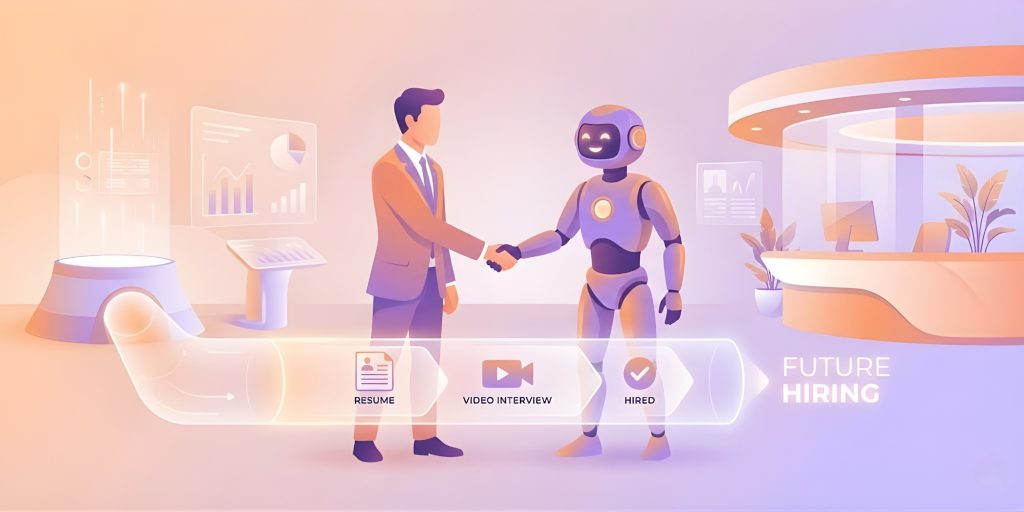
Recruiting chatbots solve real problems like slow response times and recruiter overload. That alone keeps them relevant. But the future is not about chatbots running hiring alone. It is about balance.
Companies that see success use conversational AI recruiting as a support layer. The chatbot handles the first hello. Humans take over when judgment, empathy and trust matter most. This shared model is what the future looks like. Fast where it should be and human where it must be.
Future Timeline Slider
Slide through time to see how hiring conversations change.
Speed matters, but trust still wins.
Chatbots handle first questions and scheduling so recruiters can spend time on real conversations.
How AI Platforms Use Chatbots Responsibly
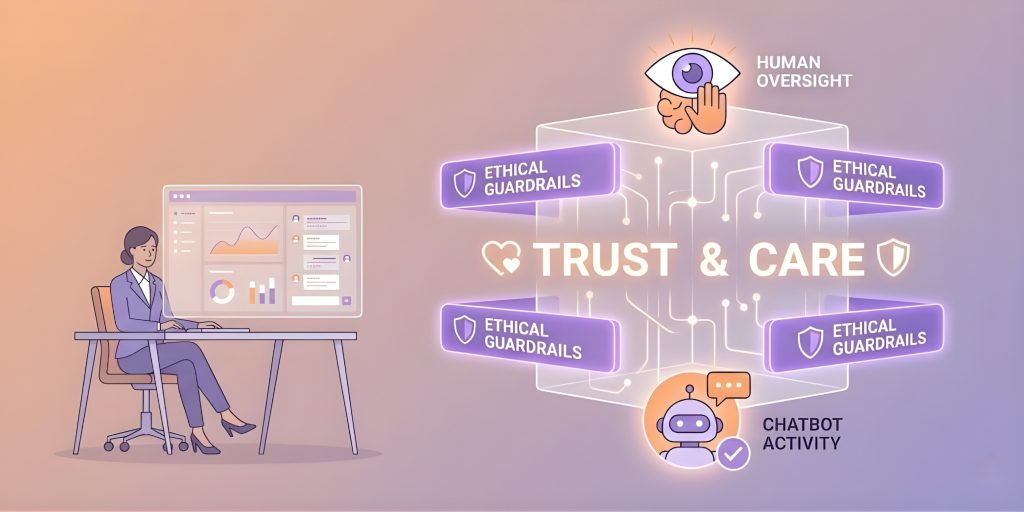
Responsible use usually comes down to boundaries. Good platforms do not let chatbots make final decisions. They are there to help and not to judge. Candidates should also know when they are talking to a bot instead of guessing.
Ethical platforms also review chatbot conversations often. They test responses for clarity and fairness. Many teams now build feedback loops where recruiters can flag issues and improve responses quickly.
Another key step is data care. Responsible platforms collect only what they need and explain why. This builds trust and protects candidates. When done right, chatbots become helpers, not gatekeepers.
Ethics Signal Detector
Read each chatbot behavior. Decide if it feels responsible or risky.
The chatbot explains why it asks for availability and how the info will be used.
Choose an option to see what this behavior signals.
Chatbots vs Human Recruiters
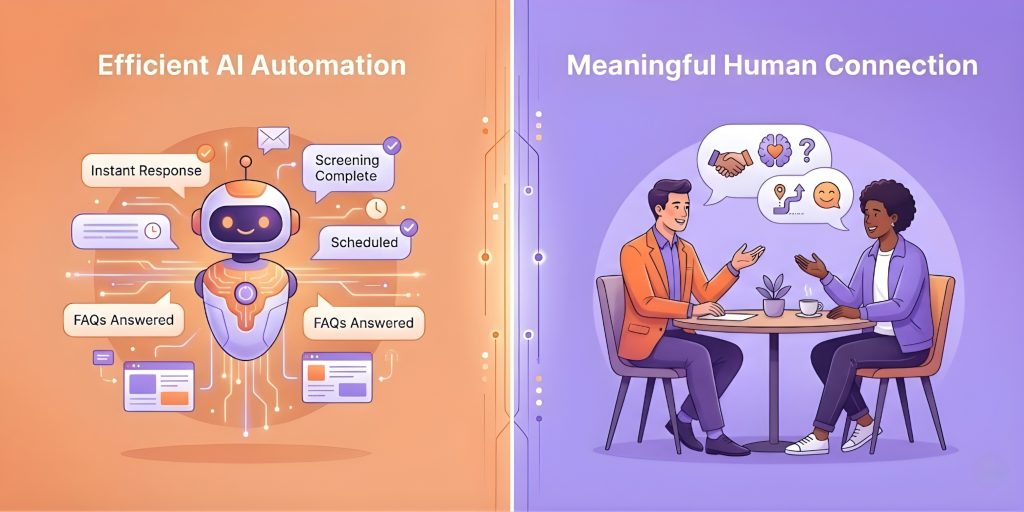
This is not a battle because it is a partnership.
Chatbots win on speed and consistency. They answer instantly and never forget to follow up. Human recruiters win on context and connection. They read between the lines and build relationships.
When teams rely only on chatbots, then hiring feels cold. When they rely solely on humans then hiring slows. The best results come when chatbots clear the path and recruiters guide the journey.
Role Swap Exercise
Step into both roles. Pick what happens first, then see the handoff.
Choose one option to see the impact on speed and trust.
Choose one option to see why humans still matter here.
Candidate Experience Considerations
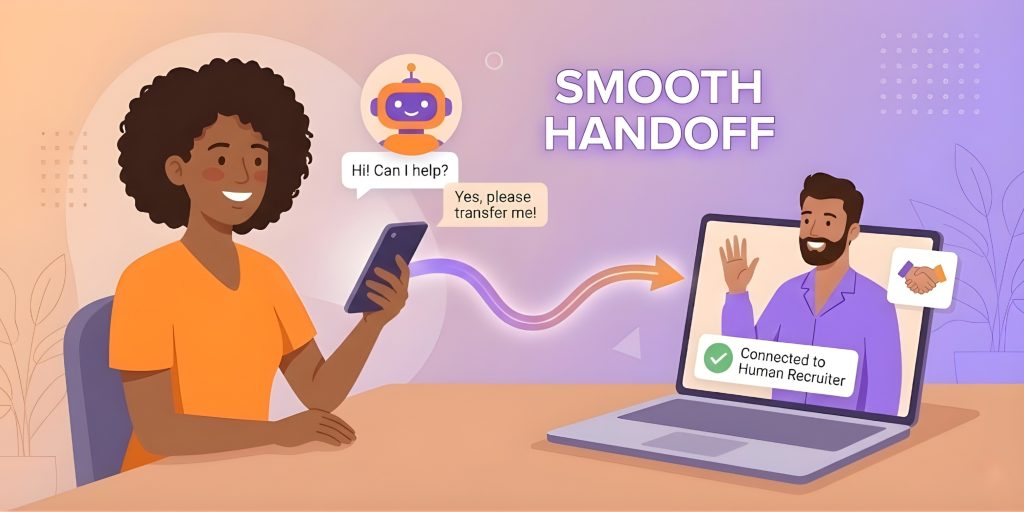
Candidate experience is where chatbots really get tested.
When they work well, things move faster and feel clearer. People know what is happening and what comes next. When they do not work well, the experience can feel frustrating, like talking in circles with no way to reach anyone.
Teams that think this through build simple handoffs. There is always a way to talk to a real person. The language matters too. Short, friendly messages feel better than long or scripted ones.
This is not about showing off technology. It is about making sure candidates feel heard from the first message to the last update.
Candidate Journey Scorecard
Rate each stage from a candidate view. Your result updates instantly.
Conclusion
Recruiting chatbots are not meant to run hiring by themselves. Hiring still works best when people stay involved.
When chatbots are used with intention, then they help move things along and reduce confusion. But it is human judgment that keeps the process fair and trustworthy. Teams that find that balance tend to make better hiring decisions and not just faster ones.
FAQs
Click a question to expand the answer.
Candidates usually respond well to quick answers and simple guidance. Chatbots work when they are actually helpful and easy to deal with. Once it feels impossible to reach a real person then interest drops fast.
Chatbots can support fairer hiring when they are set up the right way. Asking the same questions early on helps keep things consistent. Even then teams still need to review how these tools behave to make sure nothing slips through unnoticed.
No. Chatbots support recruiters by handling repetitive work. Recruiters remain essential for decision making, relationship building and trust. The role evolves but does not disappear.