


TL;DR
- Employee onboarding process optimization saves time and boosts retention.
- It uses digital tools to welcome and guide new hires.
- Benefits: faster productivity, fewer errors, better experience.
- Steps: map onboarding, automate key tasks, choose tools, train HR.
- Avoid over-automation, culture gaps and missing feedback.
- Builds talent management and workforce planning and values of teamwork early.
Picture this: a new hire arrives for their first day but all they see is a stack of documents, a briefing they don’t fully understand and a login that still isn’t set up. That awkward first morning captures exactly why employee onboarding process optimization matters: a messy start can impact engagement, confidence and how fast someone becomes productive.
Now imagine a smoother scenario: the new colleague receives a welcome email ahead of day one, has an access badge ready, is introduced to the team right away and begins their training as a new employee in a structured, digital-first way. That’s the value we’ll walk through below.
What Is Employee Onboarding Automation?
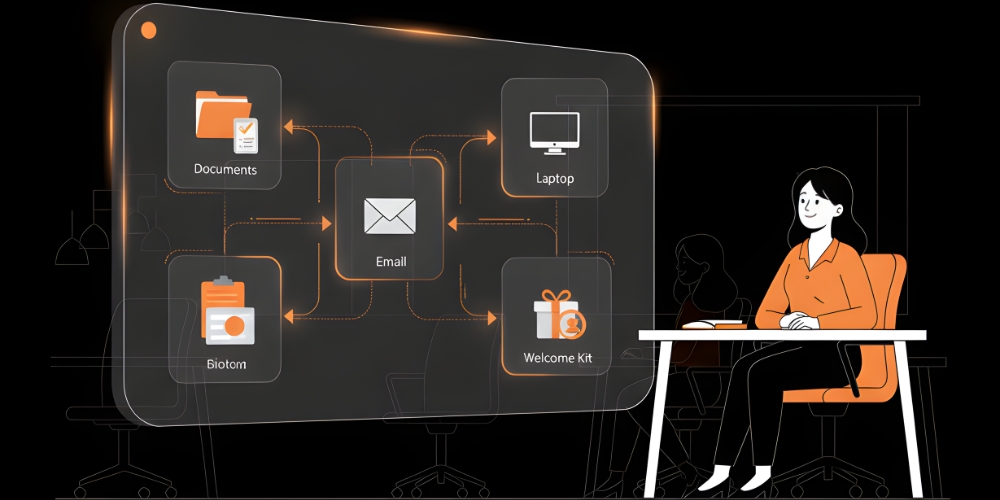
When we talk about employee onboarding automation, we mean the use of software tools and digital workflows to remove manual steps in welcoming new team members. It covers tasks like form submission, account setup, access provisioning, training scheduling and reminders. The goal is to make the process repeatable, consistent and efficient so new hires feel welcomed and ready.
For instance, instead of HR chasing signatures, the system sends an e-form, auto-notifies IT to set up a machine and starts an online module for the new hire, all sequentially and automatically. That leaves HR free to focus on the human side: building relationships, embedding culture and supporting growth.
What Is Employee Onboarding Automation?
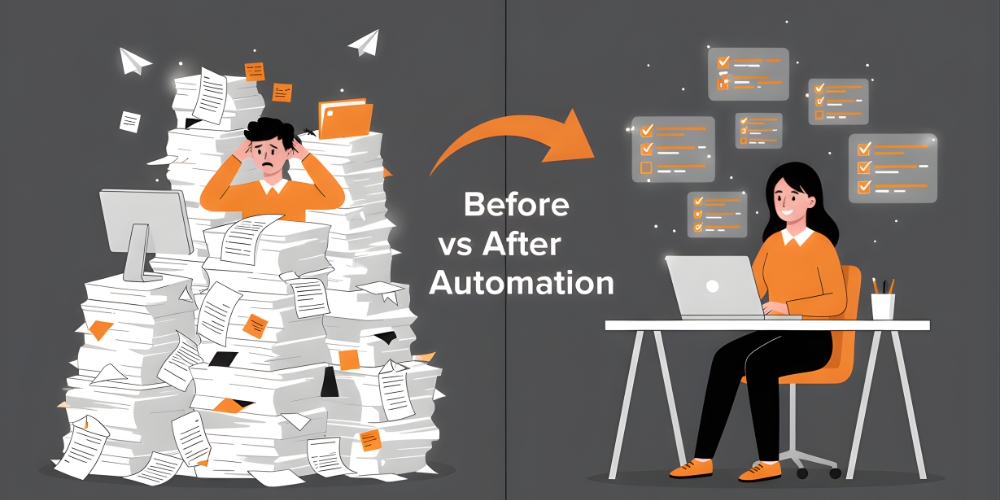
- 📝 Forms printed and passed around
- 🖥️ Logins not ready at start
- 📦 Laptop request still pending
- 🕒 Day one spent waiting
- 📧 Welcome email sent before day one
- 🔐 Accounts provisioned on schedule
- 💻 Device ready for pickup
- ✅ Guided checklist starts at login
Why Automate Employee Onboarding?
There are several compelling reasons to move to automation when refining the employee onboarding process optimization:
- Faster time to productivity: Organizations using digital onboarding can reduce the wait time for new hires to start contributing meaningfully. For example, some tools report reductions of up to 80% in onboarding time.
- Higher retention: A strong onboarding experience correlates with better retention. Studies show that employees with exceptional onboarding are ~2.6 times more likely to feel satisfied and about 69% are more likely to stay three years or more.
- Lower error and cost: Manual data entry and redundant steps create risk. Automation reduces human error and administrative overhead.
- Consistency and culture embedding: When the process is structured, every new hire gets the same welcome, introduction to your values of teamwork and begins their journey aligned with your organization’s expectations.
- Enables broader strategy: With onboarding handled smoothly, HR can focus on talent management and workforce planning rather than firefighting paperwork.
Why Automate Employee Onboarding?
Estimate monthly time and cost savings from onboarding automation.
Assumes 40% time reduction from automation. Tweak in “Adjust assumption.”
Steps to Automate Employee Onboarding
Here is a clear guide that walks you through how to bring automation into your onboarding process while keeping your focus on employee onboarding process optimization:
Step 1: Map your current process
Start by listing every touchpoint a new hire goes through: paperwork, IT access, training, introductions and compliance. Identify manual tasks and delays.
Step 2: Identify tasks to automate
Choose repetitive, well-defined steps: e-forms, document signatures, account creation, equipment requests. These are ideal for automation.
Also think: How will you support training a new employee? Scheduling modules, reminders and tracking completion are automatable.
Step 3: Select the right tools
Assess software that integrates with HR systems, handles workflows, sends alerts and supports analytics. Ensure it fits your scale. For example, the global onboarding software market is expected to grow significantly, up to USD 4.36 billion by 2029.
Step 4: Configure workflows and welcome experiences
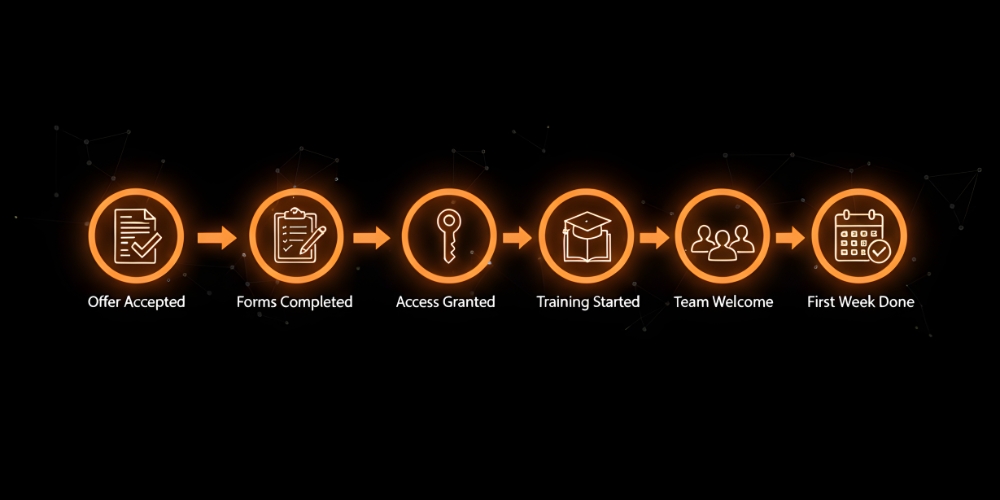
Build automated flows: when an offer is accepted → e-form sent → IT notified → training module unlocked → mentor assigned. Also design the cultural welcome, including videos, team introductions and your organization’s values. Embedding values of teamwork from day one can shape how new colleagues see their role.
Step 5: Train HR and stakeholders
Even the best tool fails if HR, IT and hiring managers don’t know how to use it. Provide training, define roles and ensure everyone understands their part. Also involve managers: they play a key role in onboarding success.
Step 6: Launch and monitor
Roll out automation, preferably in phases. Track metrics: task completion rate, time to productivity, new hire satisfaction and retention.
Step 7: Continuous improvement
Keep improving by tracking data and noticing where things slow down. Listen to feedback from new hires and use it to make each round smoother. With automation, you can keep testing and updating the process instead of repeating the same routine every time.
Common Mistakes to Avoid When Automating Onboarding
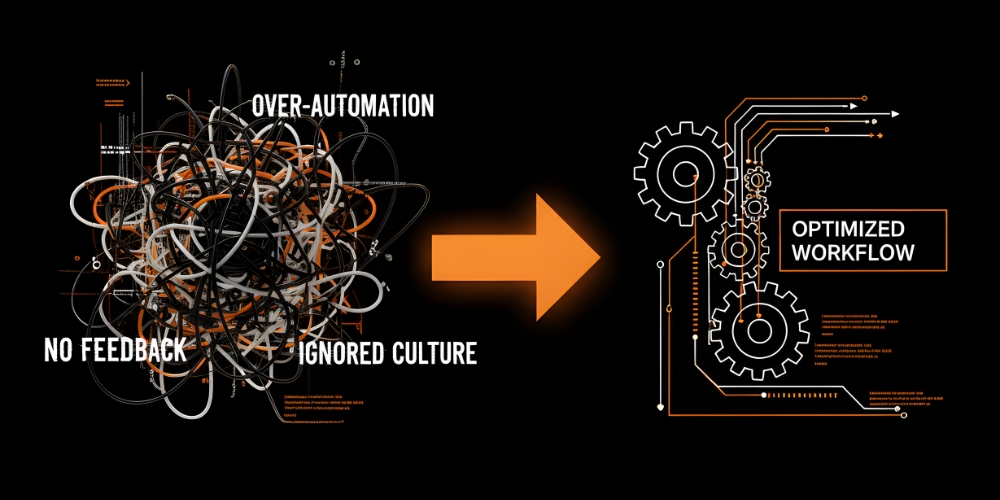
Automation makes onboarding smoother but only if it’s done thoughtfully. Many HR teams jump into automation tools without understanding their actual process gaps. Here are the most common mistakes to avoid while improving the employee onboarding process optimization:
Automating chaos instead of fixing it first
If your current onboarding is inconsistent or unclear, automation will only multiply those issues faster. Always streamline and define your workflow before introducing any software.
Ignoring the human element
Automation should enhance the welcome not remove it. Don’t skip personal check-ins or mentorship just because tasks are digital. A quick video call from the manager still makes a new hire feel valued.
Overcomplicating the setup
Many HR teams choose tools that have too many steps, logins or integrations. The result? Confusion for both staff and new hires. Start simple, such as automating high-impact areas like forms, compliance and equipment allocation first.
Forgetting feedback loops
After the first batch of new hires goes through automated onboarding, collect feedback. Without that, you can’t measure whether it’s helping with productivity or engagement.
Skipping culture onboarding
Automation is about connection. Add culture videos, welcome notes and introductions to your team's values. That’s what builds belonging and engagement early on.
Common Mistakes to Avoid When Automating Onboarding
Pick the better decision for each situation. Learn why in one line, then move to the next.
Best Practices for Successful Automated Onboarding
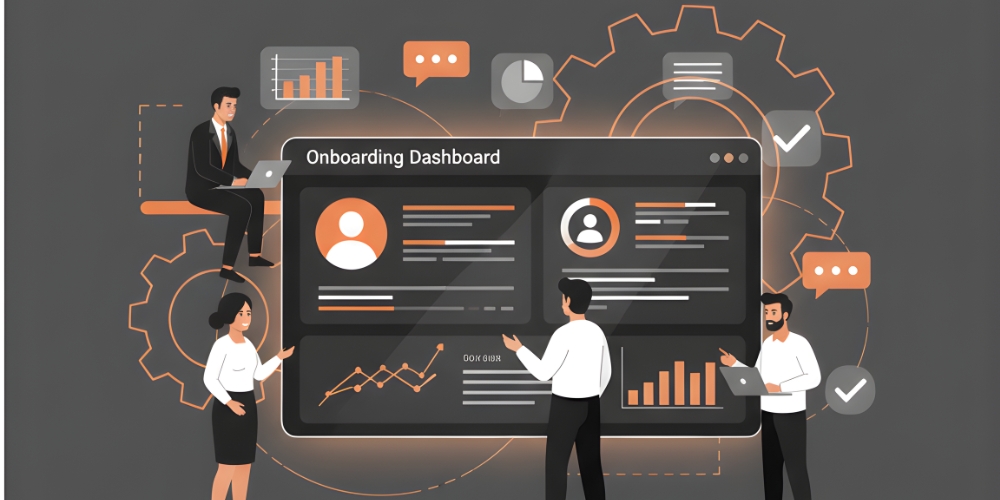
Once the basics are set, you can turn onboarding into a real growth driver. Here’s how to make your automation effort succeed and support the long-term employee onboarding process optimization.
Keep the employee journey front and center
Every automation choice should improve the new hire’s experience not just HR’s efficiency. Think of the process as a guided path that starts with the offer letter and extends through the first 90 days.
Integrate across systems
Your HRIS, payroll, email and learning management systems should talk to each other. Integration avoids redundant data entry and errors. A unified flow keeps the employee experience seamless from preboarding to training a new employee.
Track success metrics
Measure outcomes like completion rates, time to full productivity and employee satisfaction. For example, companies that track onboarding success report a 50% faster integration for new hires.
Personalize where it matters
Templates help with efficiency but a small personal touch like a manager-written welcome message goes a long way. Combine automation with human empathy.
Align onboarding with broader goals
Onboarding works best when it connects to the bigger picture. Link your automated process with talent management and workforce planning so every new hire understands how their growth supports the company’s direction. When onboarding includes long-term skill building, employees see their place in the organization more clearly.
Best Practices for Successful Automated Onboarding
Drag the sticky notes into the day plan. Aim for a smooth balance of automation and human touch.
Optimize Employee Onboarding for Talent Assessment Success with Vettio
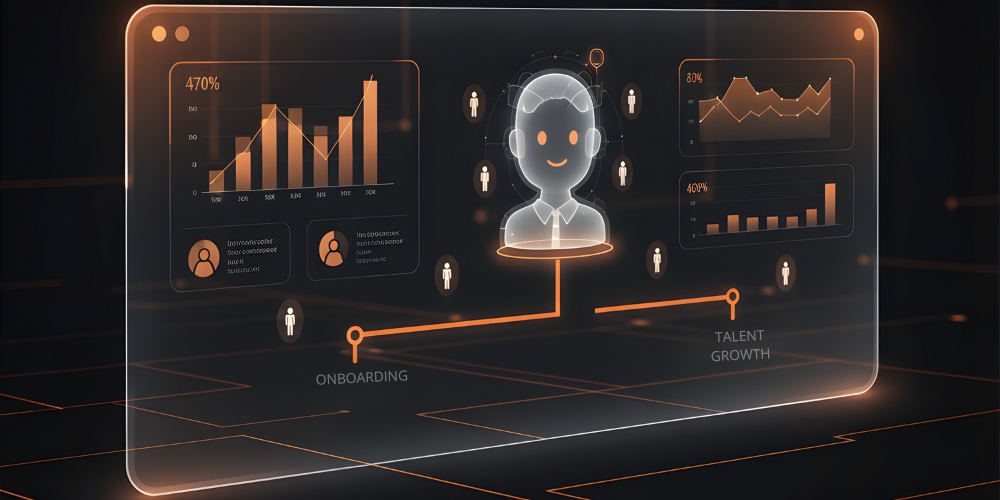
Modern HR teams track and refine every part of onboarding to make it more effective. This is where platforms like Vettio help turn employee onboarding process optimization into a smarter and more connected talent strategy.
Vettio connects onboarding with performance analytics and assessments. Instead of waiting months to evaluate a new hire’s fit, HR can access data on engagement, progress and learning outcomes early on. It bridges the gap between onboarding and continuous improvement, offering a holistic view that supports retention and skill development.
By merging automation with analytics, onboarding becomes a foundation for smarter hiring and development decisions. That’s how employee onboarding process optimization connects to talent growth and long-term business success.
Conclusion
Automating onboarding is about creating a consistent, thoughtful journey that reflects your culture and values. When done right, it boosts engagement, reduces churn and helps HR shift focus from admin work to strategy.
As organizations scale, automation becomes essential to maintaining consistent experiences across roles, locations and departments. The end goal is simple: make onboarding faster, smarter and more human. That’s what defines a modern employee onboarding process optimization.
FAQs
What tasks can be automated in onboarding?
How does onboarding automation improve retention?
Is onboarding automation suitable for small businesses?