


TL;DR
- Healthcare hiring moves quickly, and patients notice delays right away.
- When hiring slows, staff grow tired, shifts stay open, and risks increase.
- Clear steps and simple tools help shorten hiring time without taking shortcuts.
- The process works best when quality checks stay in place.
The hospital ward is full, and the waiting room keeps growing. Nurses pick up extra shifts, and doctors push through longer days. This is the daily reality behind how to recruit healthcare professionals today. Demand keeps rising, but hiring still moves slowly. Every delay adds pressure on staff and affects patient care.
The good news is this. Hiring does not have to drag on for months. With focused planning, better workflows, and the right support, teams can fill roles faster while staying safe and compliant. This blog breaks down how to recruit healthcare professionals quickly using proven recruitment strategies in healthcare that protect quality and trust.
Why Speed Matters in Healthcare Recruitment
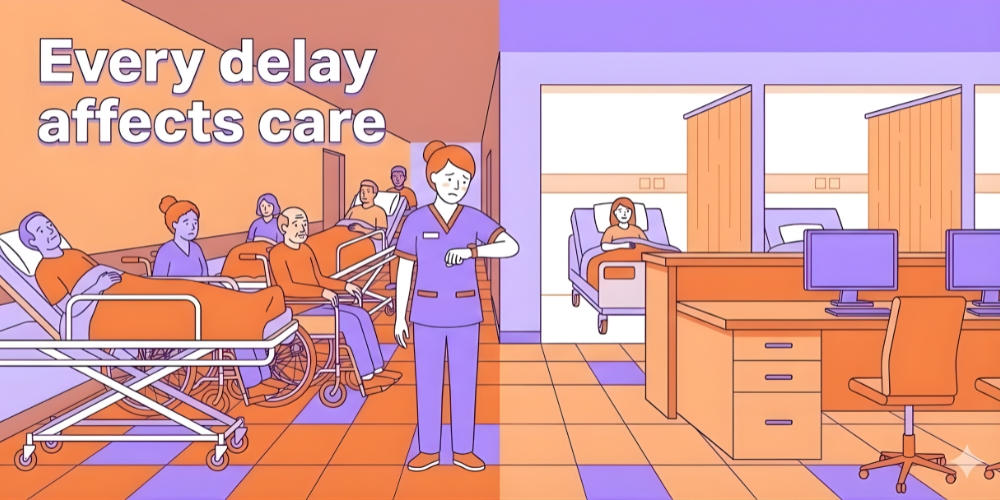
Hiring speed is not about beating competitors. It is about patient safety. When roles stay open, care teams feel the strain. Errors rise when people are tired and rushed.
To understand what is healthcare recruiting, it helps to see it as a direct link between staffing and care delivery. When recruitment slows, patient access suffers first.
The WHO estimates a global shortage of around 11 million healthcare workers by 2030. This gap hits hospitals and clinics the hardest.
In the United States alone, the AAMC projects a shortage of up to 124,000 physicians by 2034.
These numbers show one thing clearly. Slow hiring is no longer a minor issue. It directly affects access to care, staff morale, and long-term outcomes. Strong healthcare recruitment strategies focus on speed because delays now carry real clinical risk.
What happens when a role stays open?
Move the slider to see how delays pile up.
Biggest Challenges in Fast Healthcare Hiring
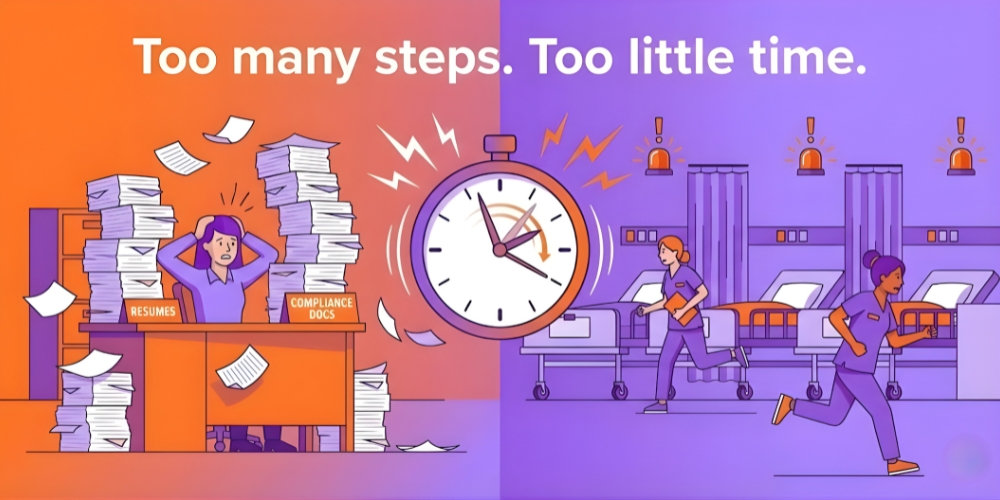
Hiring quickly sounds simple. In reality, several roadblocks slow teams down when recruiting in healthcare.
One major challenge is compliance. Licenses, certifications, and background checks take time. Skipping steps is not an option in a regulated environment.
Another challenge is volume. During peak demand, recruiters may screen hundreds of profiles for one role. Manual recruitment screening eats up time and energy, especially when roles must be filled urgently.
Burnout plays a role, too. Hiring managers are often clinicians with limited time. Reviewing resumes or conducting interviews falls to the bottom of their list. This is where a clear healthcare recruitment process makes a real difference.
There is also the role-mismatch problem. A great nurse may still be wrong for a specific unit. Emergency care requires different skills from outpatient clinics. Interview prep also varies, such as preparing questions for a nurse practitioner versus a general nursing role.
What’s slowing your healthcare hiring down?
Answer 5 quick questions. Get a simple diagnosis.
How to Recruit Healthcare Professionals Quickly: Step-by-Step

Clarify roles before you post
Speed starts with clarity, and vague job descriptions slow everything down. Define shift patterns, unit type, patient load, and required certifications upfront. This is one of the most effective healthcare recruiting tips for reducing wasted time later.
Build short candidate pipelines
Do not start from zero every time. Maintain a warm list of past applicants, interns, and referrals. This approach strengthens long term recruitment strategies for healthcare teams and cuts weeks off hiring cycles.
Shorter hiring timelines help hospitals reduce staffing gaps and ease pressure on existing teams. Even small improvements in hiring speed can make daily operations more stable and manageable.
Simplify early screening
Long forms and repeated requests turn candidates away. Start with short applications and leave deeper checks for later. This keeps good candidates interested and supports recruiting for healthcare professionals at scale.
This is where AI recruitment software can help as it handles early sorting and highlights strong matches faster than manual review, while humans keep control of final decisions.
Schedule interviews faster
Batch interviews when possible. Offer flexible time slots, including virtual options. Delays often happen between interview rounds, not during them.
Healthcare roles continue to grow faster than average, which means competition for talent will stay high. Faster interviews reduce drop-offs.
Keep communication tight
Silence kills momentum. Send quick updates, even if there is no decision yet. Candidates who feel respected are more likely to stay in the process.
Clear timelines also help hiring managers stay accountable. This kind of discipline is a core part of a strong healthcare recruitment strategy.
Where AI Makes the Biggest Difference
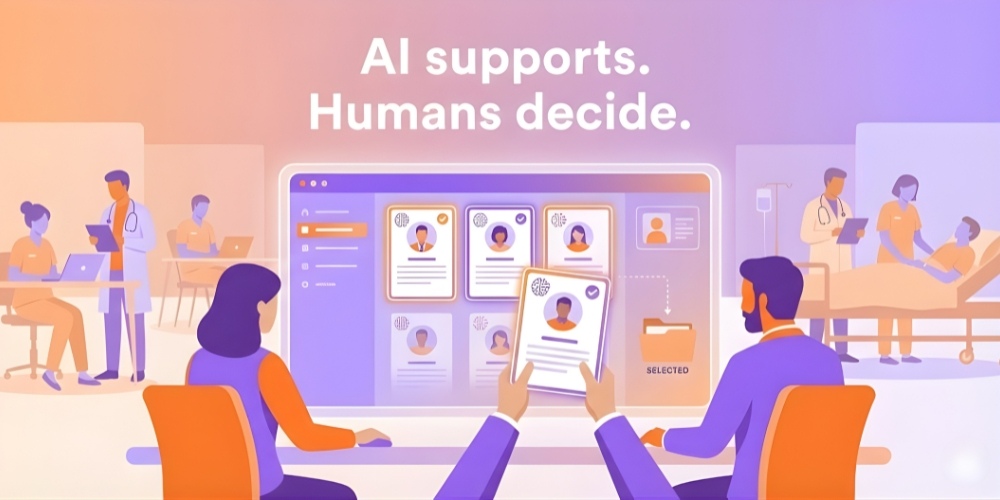
Speed problems in healthcare hiring usually show up at the same points. Resume overload. Slow shortlisting. Missed follow-ups. This is where AI quietly saves time.
AI works best in the early stages. It reviews profiles, checks role fit, and ranks candidates based on required skills and certifications. Instead of reading hundreds of resumes, recruiters focus on the strongest matches first.
AI also helps with scheduling. Automated interview coordination reduces back-and-forth emails and cuts waiting time between stages. That alone can shave days off the hiring timeline.
What matters most is control. AI supports decisions. It does not replace human judgment. Hiring managers still make final calls, which aligns with the responsibilities of what is a healthcare recruiter in modern hiring teams.
AI or Human? Quick hiring decision game
Pick one. Then see the simple explanation.
How to Maintain Quality While Hiring Fast
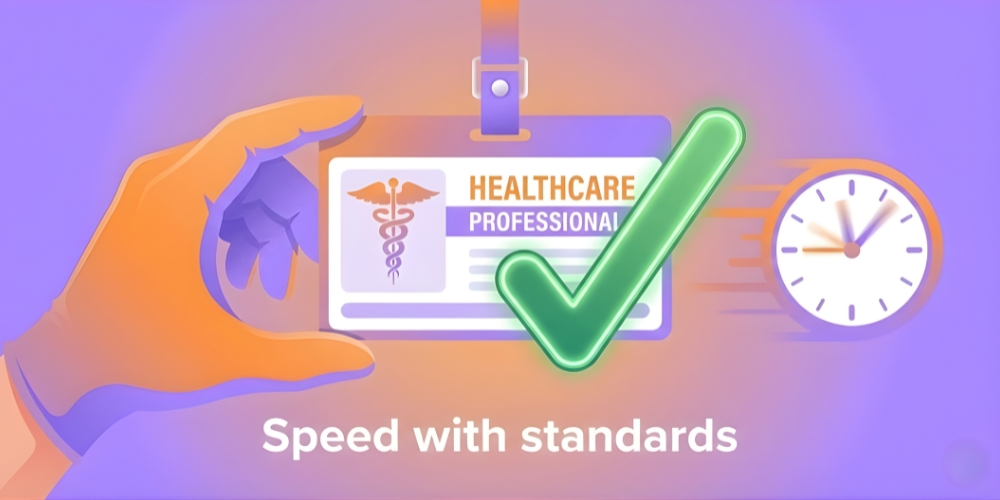
Hiring as fast as you can isn’t an excuse to wing it. To keep your hiring process from getting sloppy, you still need to have some boundaries in place. That’s the key to keeping quality steady.
Start with the basics. Licenses and certifications matter. Legal checks stay required for every role. Hiring moves faster when steps flow better, not when steps disappear.
Structured interviews help because asking the same main questions keeps things fair. It also helps teams stay on the same page especially when what is a health care recruiter looks different from one hospital to another.
Peer involvement helps too. A short clinical review by a senior nurse or physician adds confidence without slowing the process.
Quality improves when feedback loops are short. If a hire does not work out, review why and adjust quickly. Small changes prevent repeat mistakes.
Keep or Cut? Quality gate challenge
Mark each step as Keep or Cut. Then see what must stay, even when hiring fast.
Recruiting Different Healthcare Roles Quickly
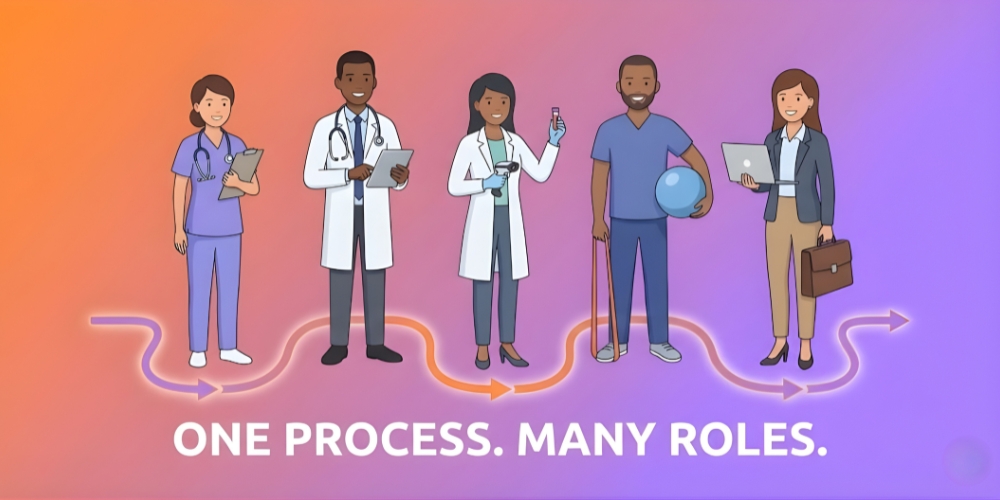
Healthcare roles do not all follow the same hiring rhythm. Each position needs its own hiring approach to move smoothly.
Nurses usually look for clear shift details and realistic workloads. When schedules and unit expectations are shared early, then decisions happen faster.
Physicians care deeply about independence, team dynamics, and the type of patients they will serve. Open and honest conversations at the start help speed up hiring for these roles.
Allied health professionals, such as technicians and therapists, respond best when skill requirements are clear and credential checks move without delays.
Leadership roles depend on strong preparation. When interview panels are aligned, decision makers are clear, and timelines are set early. Hiring avoids unnecessary pauses. This kind of flexibility helps healthcare teams grow with confidence.
Role Match Scenario
Pick a role. See what matters most when candidates decide fast.
Conclusion
Healthcare hiring is just going to get more and more competitive since patient demand is up and the best professionals have choices galore. It’s the teams that know how to keep things moving smoothly that are going to come out on top, and not the ones who try to rush things.
Clear roles, simple workflows, and smart support make recruiting healthcare professionals faster and more reliable. When speed and quality move together, everyone benefits. Patients, staff, and the organization as a whole.
FAQs
Quick answers to common questions.
Now, timelines vary a lot depending on the role and location. Entry-level or nursing staff might take weeks to land while specialists and leaders can take even longer. Still, having a clear process in place and getting the different teams more coordinated can speed things up.
What it boils down to is keeping your compliance steps in place and then just getting better at everything else around them. Clear requirements, early checks and better communication make all the difference in the world.
Yes when used as a support tool. AI can speed up early stages like screening and scheduling while humans retain control over interviews, final decisions and compliance checks.