

TL;DR
- On demand interviews let people record answers whenever they are ready.
- Live interviews take place at the same time with a recruiter watching.
- On demand is quicker and works well when many applicants apply.
- Live interviews help you learn more about personality and team fit.
- AI supports both by reducing bias and saving everyone’s time.
Hiring feels fast until the interviews begin. Most companies post a job and wake up to a giant pile of resumes. Then comes the real challenge. Getting every promising candidate and every busy recruiter on the same call. This slows hiring, and sometimes great talent slips away. On demand interview tools came in to solve that scheduling headache, but many still debate whether they should replace traditional “interview live” calls.
The good news is you don’t have to choose one or the other. Both interview styles have a role. When you understand their strengths, you can pick the right option for each hiring step and get closer to a complete candidate screening experience that is fair, quicker, and more human.
What Is an On Demand Interview?
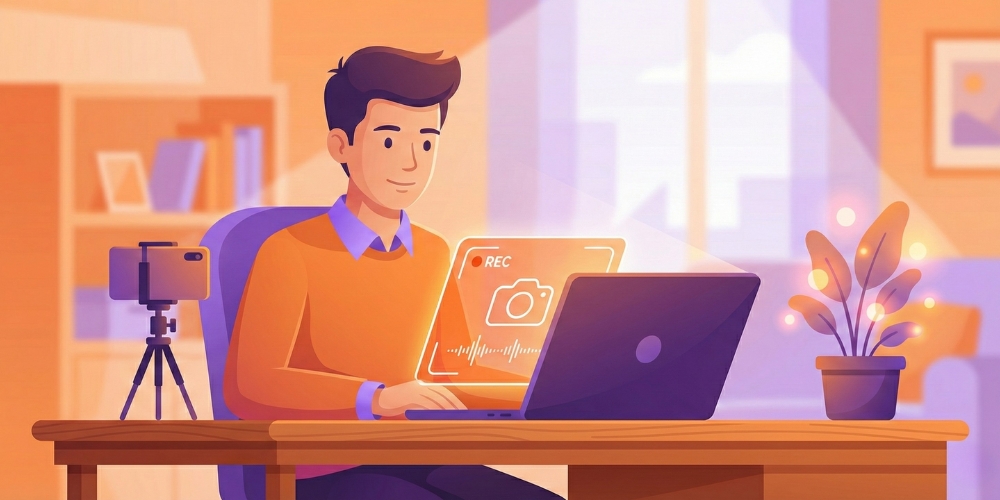
An on demand interview session is where candidates record their answers to preset questions using their own device. Recruiters watch the responses later, just like scrolling through short video clips. These are also called on demand video interview or video on demand interview formats.
This style became more popular after 2020 when remote hiring surged. In fact, 70 percent of talent leaders say their organizations use virtual interviews as part of their hiring process.
How It Works:
- Candidate receives a link.
- They record answers on a phone or a laptop.
- Recruiters review and rate clips anytime.
It saves time on both sides and helps companies review more talent in less effort. Hiring teams can also use on demand interview questions that are the same for every applicant, which boosts fairness and makes feedback easier to compare. Some tools even provide on demand video interview questions hint prompts or practice rounds to reduce stress.
This method is especially useful early in the funnel for busy roles like customer support, retail, healthcare, or graduate hiring, where speed matters. It also supports AI job interviews where analytics help highlight candidate communication, clarity, and keywords used during answers.
What Is a Live Interview?
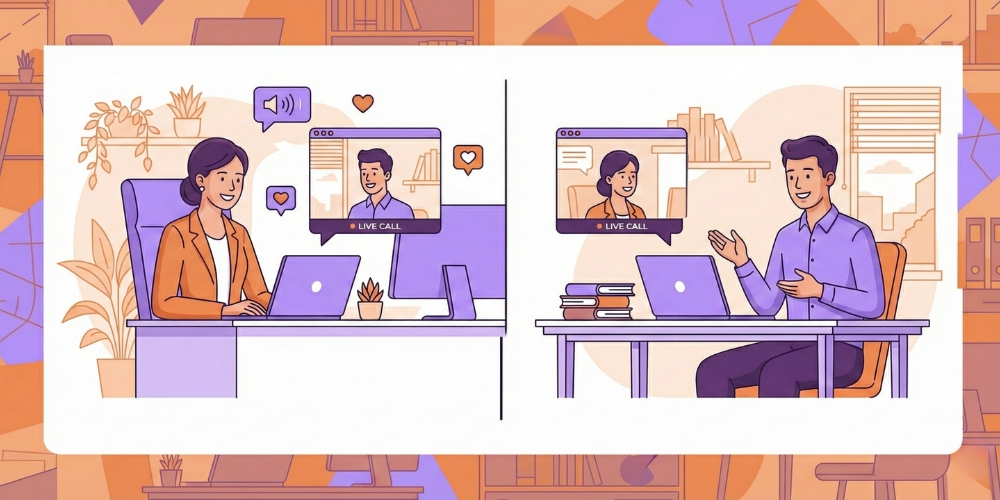
A live video interview session is the classic format. Both sides join at the same time. It can happen online using a camera (live interview video) or face-to-face. This style helps employers read the full communication style, body language, and personality. It feels more familiar to candidates because they can respond naturally and ask follow-up questions on the spot.
Live interviews are best for deeper conversations where decision makers want to test collaboration, problem-solving, and culture alignment. You also get to talk through questions that don’t fit inside a short recording. However, scheduling can be tough, especially when multiple interviewers are involved or candidates are in different time zones.
Build a Live Interview Dialogue
Drag the lines into the order that feels like a friendly live interview. Then click “Check Order” to see how close you are.
On-Demand Interview vs. Live Interviews — Side-by-Side Comparison
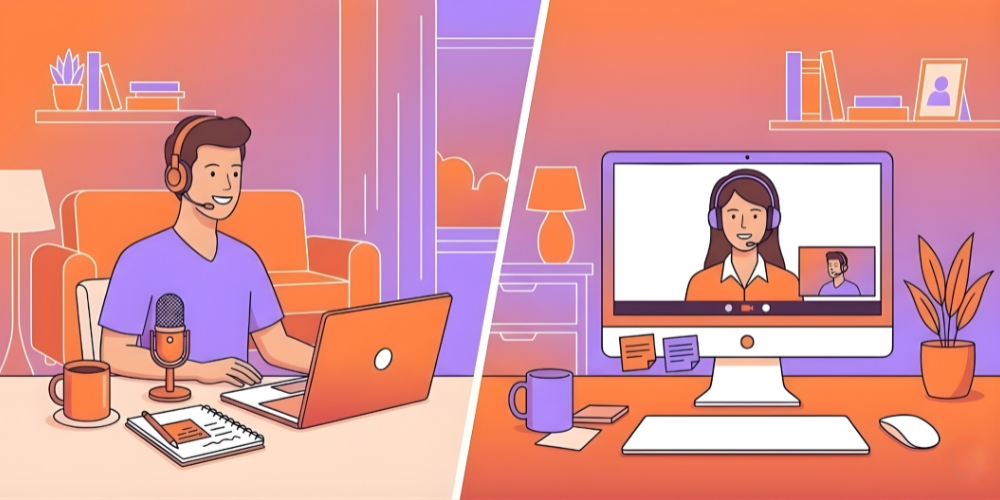
On-Demand vs Live Interviews — Side-by-Side Comparison
| Feature | On-demand interviews | Live interviews |
|---|---|---|
| Timing | Candidate records anytime | Everyone joins at the same time |
| Speed | High-volume review with less effort | Slower and needs more planning |
| Human Interaction | Lower in the first stage | Stronger human connection |
| Fairness | Same questions for each person | Depends on interviewer style |
| Candidate Comfort | Record calmly in your own space | Can feel rushed or stressful |
| Screening Quality | Strong for early review | Best for deeper role checks |
| Cost | Lower effort at scale | More time per candidate |
| Data Insights | Rating tools and AI support | Mainly human notes |
An on demand video interview tool checks job skills early and fast. A live interview call looks at personality and teamwork. Using both removes guesswork and leads to better hiring choices.
Pros and Cons
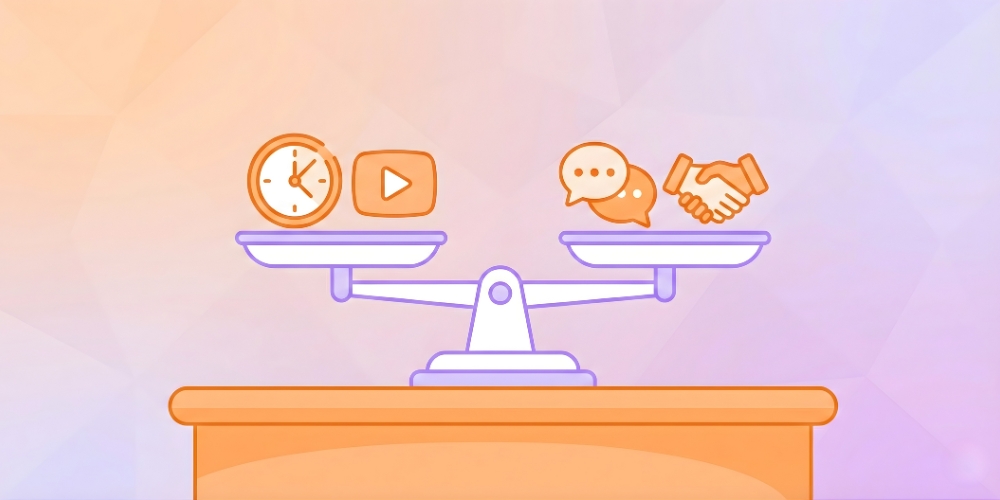
Both formats help you hire smarter. But each shines at different moments in the hiring journey.
Pros and Cons of On-Demand vs Live Interviews
Pros and Cons of On-Demand Interviews
| Benefits | Drawbacks |
|---|---|
| Quick way to screen large groups in the first round | Hard to build personal connection in the early stage |
| No need to match schedules and people can record whenever they want | Candidates may worry about recording quality |
| Everyone gets the same questions which makes reviewing fair and clear | Some roles need deeper discussion sooner |
| Works well for teams hiring across different countries and time zones | |
| Platforms allow playback and scoring to make reviewing easier for hiring teams |
Pros and Cons of Live Interviews
| Benefits | Drawbacks |
|---|---|
| Talking both ways helps people feel comfortable and trusted | Setting a time for everyone can slow the entire process |
| Hiring teams can notice personality and how someone might work with others | Personal opinions might affect the review without anyone noticing |
| Follow-up questions and real examples are easier to explore | Both the recruiter and the candidate need more focus and energy |
| Useful when making the final call on who to hire |
A smart hiring team mixes both. On-demand for speed. Live for clarity.
How AI Makes Both Interview Types Better
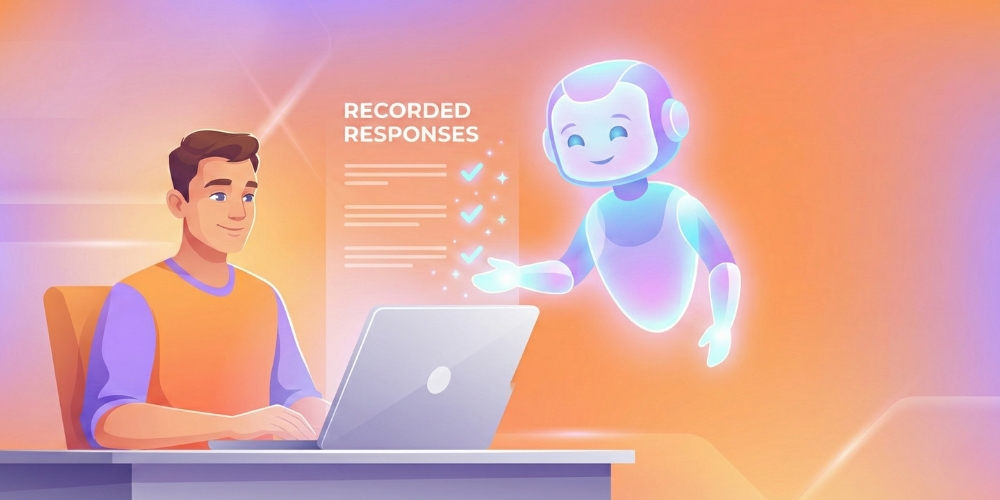
AI makes interviewing fairer and smoother while people still make the final call.
This is how it helps:
- Faster review. AI analyzes speech clarity and structure so hiring teams focus on meaningful insights.
- Bias reduction. More consistent scoring reduces unfair differences.
- Better fit prediction. Highlights communication strength, teamwork stories, and keywords related to jobs.
- Stronger candidate experience. AI tools offer practice rounds and virtual interview tips that help candidates relax.
- Easy collaboration. Everyone on the team can watch, comment, and rate clips anytime.
When screened fairly, candidates feel heard. And companies get better hiring confidence.
How AI Makes Both Interview Types Better
Guess if the insight below comes from a human recruiter or AI support tool
Clear storytelling helps explain how you solve problems.
Eye contact and calm tone make conversations feel safer.
Tracking patterns in answers can surface skills faster.
When to Use Each Type
Use on demand interviews when
- You have a high volume of candidates.
- The role requires quick screening (support, retail, internships).
- Teams need flexibility across time zones.
- You want a structured evaluation with on demand video interviewing features.
Use live interviews when
- Culture, teamwork, or leadership skills matter most.
- You need deeper follow-up questions.
- Senior roles require evaluation by multiple decision makers.
- You want the personal touch of a live conversation.
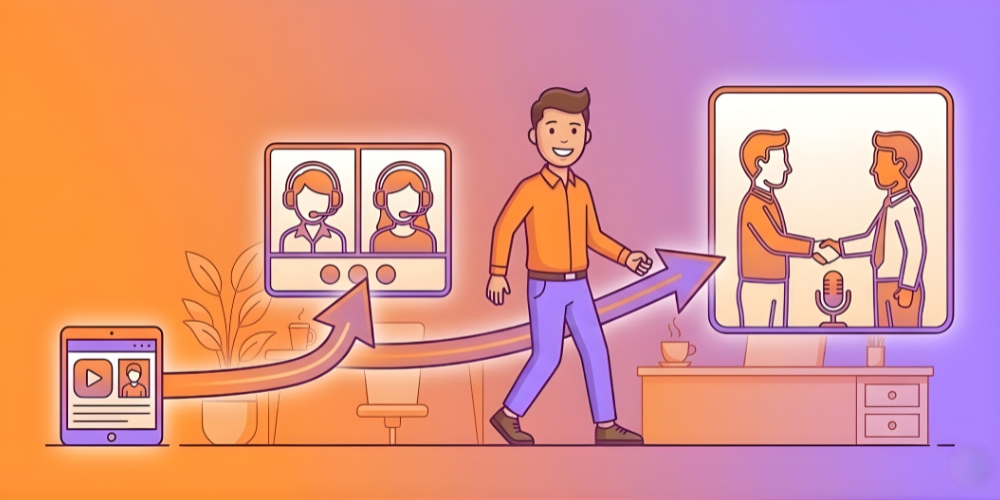
Best of Both: A Modern Hiring Flow
- Use on demand interviews to screen early.
- Use live interviews once you have a smaller group.
- Make the final choice with a panel or a job-related task.
This step-by-step approach makes hiring fair, removes confusion, and still keeps people at the center, all without slowing the pace.
When to Use Each Type
Match each job role to the best interview style. Tap both boxes to pair them.
Conclusion
You do not have to choose sides. The smartest hiring teams use both formats where they fit best. On demand interview tools help you move fast. Live conversations help you understand personality and teamwork. When you combine them with clear scoring and supportive AI features, you build a hiring process that is professional, friendly, and fair for every applicant.
FAQs
What’s the main difference between on-demand and live interviews?
Are on-demand interviews effective for all roles?
How does AI improve interview quality?