


TL;DR
- Pink collar jobs refer to care-oriented, service, and teaching roles historically held by women.
- The definition has expanded to include all gender-neutral service and hospitality careers.
- These roles are among the fastest-growing in the economy due to an aging population and service demand.
- Soft skills like empathy and communication are the primary requirements for these positions.
- Salaries vary wildly from entry-level retail to high-paying specialized nursing or therapy.
Most people have a clear image in their head when they hear “blue collar” or “white collar.” You picture a construction site or a corporate boardroom. But the lines get blurry when talking about the service industry or care-oriented roles. You have likely heard the term thrown around in economic discussions and wondered what are pink color jobs actually referring to in the modern market.’
These roles focus heavily on interaction, caregiving, and customer service. While the term originated to describe work historically dominated by women, it has evolved into a massive sector of the economy that employs people of all genders. what are pink color jobs? They are the backbone of the service economy, covering everything from nursing and teaching to hospitality and retail.
Pink Collar Jobs Meaning

To define pink collar work properly, we have to look back at the 1970s. Social critic Louise Kapp Howe popularized the term to describe careers that were typically held by women. At the time, this meant secretaries, nurses, and elementary school teachers. These roles were distinct from the manual labor of blue collar work and the administrative management of white collar work.
Today, what is pink collar work really about? It is about people. Unlike jobs that focus on producing goods or managing data, these roles focus on delivering a service or caring for others. The “pink” label feels dated to some, but economists still use it to track a specific slice of the labor market that relies on emotional intelligence and direct interaction.
The stigma that these are “women’s jobs” or low-skill positions is fading fast. As automation takes over manufacturing and AI handles data processing, the human-centric skills found in pink collar jobs are becoming the most valuable assets in the workforce. You cannot automate the empathy required to care for a patient or the patience needed to teach a kindergartner.
“Guess the Origin” Mini-Quiz: Pink Collar Jobs
Two quick questions to lock in the meaning and where the term came from. (No uniforms required.)
Quick note on “collar colors”
“Collar” terms (blue collar, white collar, pink collar, etc.) are shorthand labels for types of work—often tied to history and social perceptions, not hard rules. Use them carefully and respectfully.
Tip: If you want this quiz to match your exact article wording, edit the “Did you know?” blurbs in the script.
Examples of Pink Collar Jobs

The range of pink collar jobs examples is much wider than most people realize. It is not just about healthcare or education. It spans across several massive industries that keep our daily lives running smoothly.
Healthcare and Therapy
This is the largest segment of the pink collar workforce. It includes registered nurses, dental hygienists, physical therapists, and home health aides. According to the U.S. Bureau of Labor Statistics, healthcare occupations are projected to grow much faster than the average for all occupations from 2022 to 2032. This growth is driven largely by an aging population that requires more care.
Education and Childcare
Teachers, special education assistants, and daycare providers fall squarely into this category. While university professors might sometimes bridge into white collar territory depending on their tenure and research focus, the vast majority of K-12 educators are pink collar employees.
Hospitality and Service
Waitstaff, flight attendants, housekeepers, and concierges are all part of this sector. These roles require high levels of social stamina. If you are hiring for these roles, you need candidates who can handle high-pressure social interactions.
Administrative Support
Receptionists and administrative assistants are the classic examples. While technology has changed how these jobs function, the core requirement of managing human schedules and office flow remains the same.
Beauty and Wellness
Hairdressers, makeup artists, and massage therapists are skilled pink collars who combine technical training with intense customer service.
“Match the Job to the Description” Drag-and-Drop
Drag each job title onto the correct description. Then hit Check my matches. (It’s like a logic puzzle—except nobody gets grounded for being wrong.)
Salary Trends and Industry Growth

There is a misconception that a pink collar job automatically equates to a low-paying job. While that might be true for entry-level retail or food service positions, it is certainly not the rule for the entire sector.
Many roles in this category require advanced degrees and specialized certifications. A nurse anesthetist or a specialized speech pathologist can earn a salary that rivals or exceeds many white collar corporate management roles. The demand for these skilled professionals drives wages up. For instance, the demand for nurse practitioners is growing exponentially, pushing their median salaries well over six figures.
However, there is a gap. Entry-level pink collar job positions in the service industry, such as home health aides or childcare workers, often struggle with wage stagnation despite being essential. This has led to a significant push for better wages and unionization within the service sector.
If you are an employer looking to fill these roles, you need to be aware of the market rates. Offering competitive pay is the only way to secure top talent in a candidate-short market.
“Future Outlook” Timeline (2020–2035)
A quick look at big trends shaping pink collar industries—past, present, and “wait… it’s 2035 already?”
How Pink Collar Jobs Are Changing
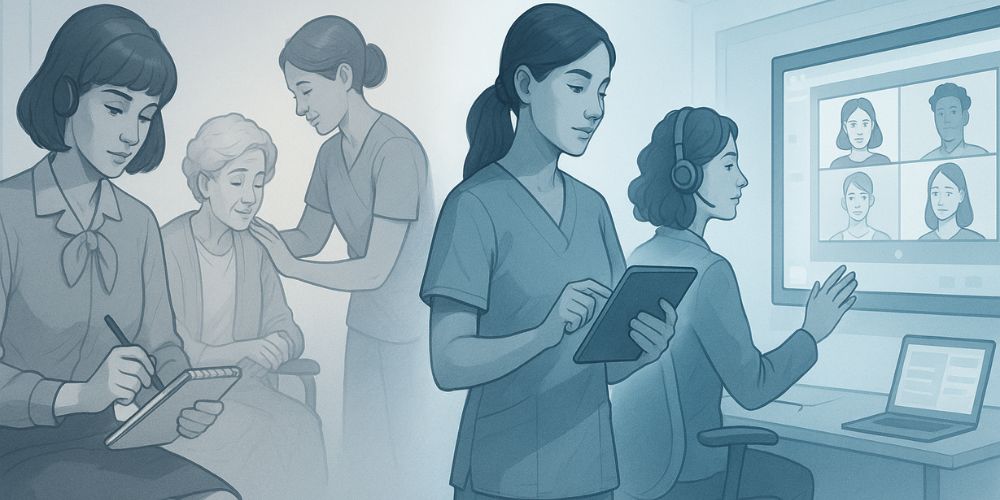
The definition of what is pink collar work is shifting beneath our feet. Three main factors are driving this change: technology, gender dynamics, and the “care economy.”
The Gender Shift
We are seeing more men enter fields previously dominated by women. This is sometimes called “pink collar shift.” Men are increasingly becoming nurses, flight attendants, and elementary school teachers. This is partly because traditional blue collar manufacturing jobs have declined, leading workers to retrain for the growing healthcare and service sectors. It helps stabilize the industry and reduces the gendered stigma attached to the work.
Technology Integration
You might think service jobs are low-tech, but that is rarely the case now. A waiter uses complex POS systems. A nurse manages digital health records and sophisticated monitoring equipment. Pink collar employees now need a blend of high emotional intelligence (EQ) and digital literacy. Employers are now screening for this hybrid skill set. For more on screening for technical adaptability, read about modern hiring practices.
The Rise of the “Care Economy”
Economists argue that the “Care Economy” is the future of work. As AI takes over logical and computational tasks, human connection becomes a premium commodity. The World Economic Forum suggests that jobs requiring human interaction will be the safest from automation in the coming decades. This elevates the status of what is pink collar labor from “support work” to “essential work.”
“Role Upgrade” Before-and-After Cards
Flip each card to see how roles evolved from “classic tasks” to “modern, tech-enabled reality.” (Coffee still exists. It’s just… self-served now.)
Pink vs. Blue vs. White Collar Jobs

To fully understand what are pink color jobs relative to the rest of the market, it helps to see them side-by-side with other categories.
| Feature | White Collar | Blue Collar | Pink Collar |
| Primary Focus | Administrative, Managerial, Strategic | Manual Labor, Trade, Manufacturing | Service, Caregiving, Teaching |
| Work Setting | Office or Remote | Construction site, Factory, Outdoors | Hospital, School, Store, Salon |
| Education | Typically Bachelor’s degree or higher | Apprenticeship, Trade School, HS Diploma | Varies widely (Certification to PhD) |
| Key Skills | Analysis, Strategy, Management | Physical strength, Technical skill, Machinery | Empathy, Communication, Patience |
| Examples | Accountant, Architect, Marketing Manager | Electrician, Welder, Construction Worker | Nurse, Teacher, Waiter, Therapist |
This table shows that pink collars occupy a unique space. They often require the education levels of white collar workers (like teachers and nurses) but perform work that is physically active and on-their-feet like blue collar workers.
If you are struggling to categorize a role you are hiring for, focusing on the “collar” color matters less than focusing on the skills required. We discuss this approach in our blog on skills-based hiring.
Why This Matters for Employers
Understanding what is pink collar work allows businesses to structure their management and hiring better. If you treat a creative teacher or a compassionate nurse like a factory worker (blue collar) or a spreadsheet analyst (white collar), you will likely suffer from high turnover.
These employees are motivated by different factors. Burnout is a massive risk in pink collar jobs because of the emotional toll of the work. A report by McKinsey highlighted that nursing turnover remains a critical issue for healthcare systems globally.
To retain pink collar employees, you need to prioritize mental health support, flexible scheduling, and recognition of the emotional labor they perform. It is not just about the paycheck. It is about sustainability.
The Skill Gap
Finding qualified candidates for these roles is getting harder. The skills required are often “soft skills,” which are notoriously difficult to measure on a resume. How do you prove you are patient on a piece of paper? This is why interview techniques and reference checks are vital in this sector. For advice on conducting better interviews, visit our interview question blog.
Conclusion
So, what are pink color jobs in the context of today’s workforce? They are the roles that keep society healthy, educated, and comfortable. While the term “pink collar” has a history rooted in gender division, the modern reality is a powerhouse economic sector defined by service and care.
Whether you are a job seeker looking for a career that automation cannot erase, or an employer looking to build a resilient team, paying attention to the service sector is crucial. The future of work is likely less about sitting in a cubicle and more about interacting with other humans. If you are looking to hire for these essential roles, ensure your screening process is set up to identify the unique blend of resilience and empathy these workers possess.
FAQs Pink Collar Jobs
Understanding the roles behind the label.
Why are they called pink collar jobs?
Are pink collar jobs high paying?
Are pink collar jobs declining?
What skills are needed?