

TL;DR
- Hiring professionals brought in for specific timeframes or projects.
- Ideal for seasonal spikes, rapid growth or niche roles.
- Pay for recruiting services only when active hiring is required.
- Enhanced by modern tools for faster sourcing and screening.
- Connects internal HR and external agencies without long-term overhead.
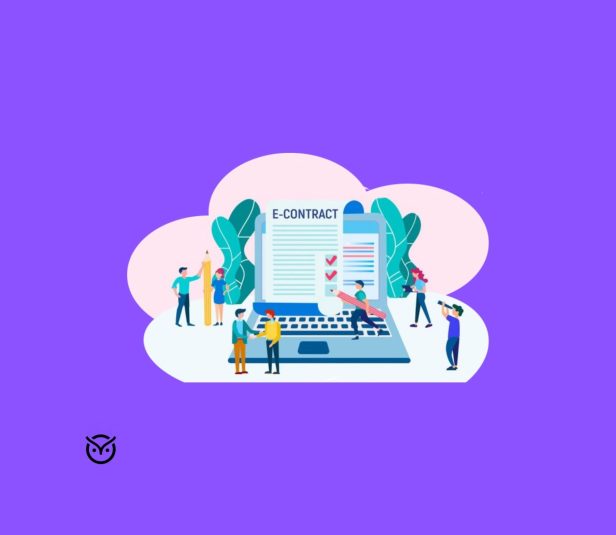
Finding the right people often slows growing companies down. When HR teams are overloaded or many roles need to be filled at once, the contract staffing recruitment process can quickly feel unmanageable. This creates hiring pressure, with leaders spending more time searching for candidates than focusing on the business, which can hurt revenue and exhaust teams.
The solution lies in agile hiring models, specifically, understanding what is a contract recruiter. Hiring a specialist for a short period can make contract recruitment easier without locking your company into the cost of a full-time role. This approach provides the surgical precision needed to scale quickly and efficiently.
What Is a Contract Recruiter?

Let’s answer, “What is a contract recruiter?” It is a professional talent scout who works for your company on a fixed-term basis, usually three to twelve months. Unlike a headhunter who works for an outside agency and earns a commission per head, a contract recruiter acts as an extension of your internal team. They use your company email, sit in on your Slack channels, and deeply understand your culture to manage contractual recruitment.
Another thing is that they are experts in the contract staffing process, often focusing on high-volume needs or specific technical departments. They help the company understand how do contract jobs work from the inside, ensuring that every candidate’s experience aligns with your brand. Because they are often “per-hour” or “per-project” workers themselves, they have a unique perspective on how to do contract work effectively and can explain to candidates exactly what is contract work and why it might benefit their careers.
Hiring Emergency Switchboard
When Companies Use Contract Recruiters

Companies typically pivot to contract hiring when their internal capacity hits a ceiling. The American Staffing Association reports that approximately 2.5 million temporary and contract workers are placed by U.S. staffing firms in a typical week. This large number comes from a few common hiring situations.
- Rapid Scaling: If a startup lands a Series B round of funding and needs to double its engineering team in 90 days.
- Specialized Projects: When launching a new department, the current HR team lacks the technical vocabulary to vet candidates.
- Covering Leaves: Filling in for an internal recruiter on parental or medical leave to ensure the contract staffing meaning doesn’t get lost in the transition.
- Testing the Waters: Utilizing a contract to hire process allows companies to evaluate a recruiter’s performance before offering them a full-time role.
Growth Timeline Game
Contract vs. Permanent Recruiters
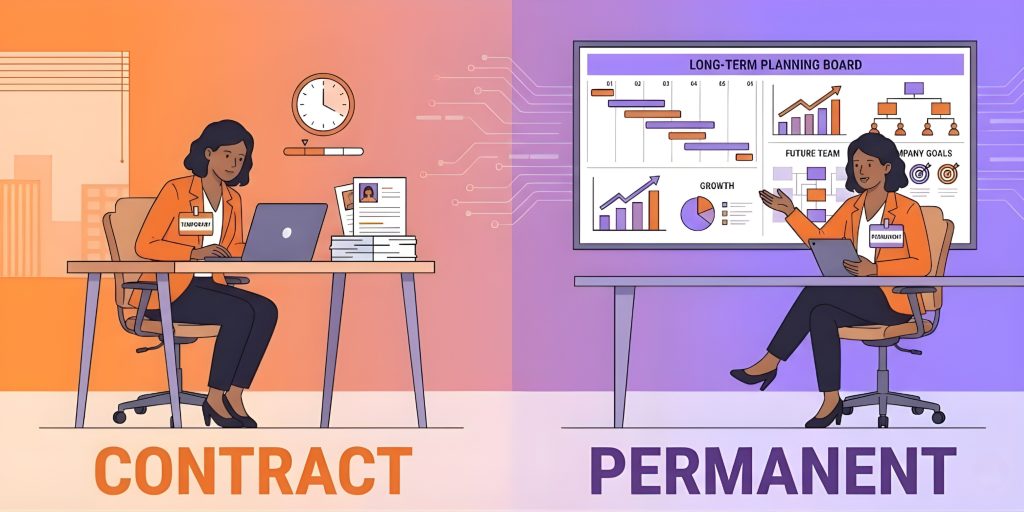
The main difference between the two is the nature of the commitment. A permanent recruiter is a long-term investment aligned with the firm’s multi-year talent strategy. In contrast, contract recruiting is about immediate “firefighting” and tactical execution.
While a permanent employee might handle broad HR tasks, a contract professional is focused solely on the funnel. They know how to list contract roles to attract interviews quickly by leveraging active databases. For companies wondering how staffing agencies get contracts, it usually boils down to their ability to provide these specialized recruiters faster than a company can hire one internally. Furthermore, if you are looking to bring in younger talent, they can advise on hiring interns through temporary university partnerships.
Draft Day: Pick Your Recruiter
Benefits and Trade-Offs

Choosing contractual recruitment comes with a specific set of pros and cons that every hiring manager should weigh.
Benefits:
- Speed: They hit the ground running with an existing network.
- Cost: No need to pay for long-term benefits or 401k matching for a short-term project.
- Expertise: Many are “career contractors” who have seen the hiring processes of dozens of top-tier firms.
Trade-Offs:
- Integration: It takes a few weeks for them to learn the nuances of your specific company culture.
- Consistency: Once the contract ends, they take their institutional knowledge of your recent hires with them.
For those looking for a middle ground, many firms opt for contract to hire staffing. The contract for hire model gives companies the option to bring a recruiter on full time if the workload stays heavy. This is common in a contract to hire position, where strong results can turn a temporary role into a permanent offer.
Hiring Risk Balance Meter
How AI Enhances Contract Recruiting
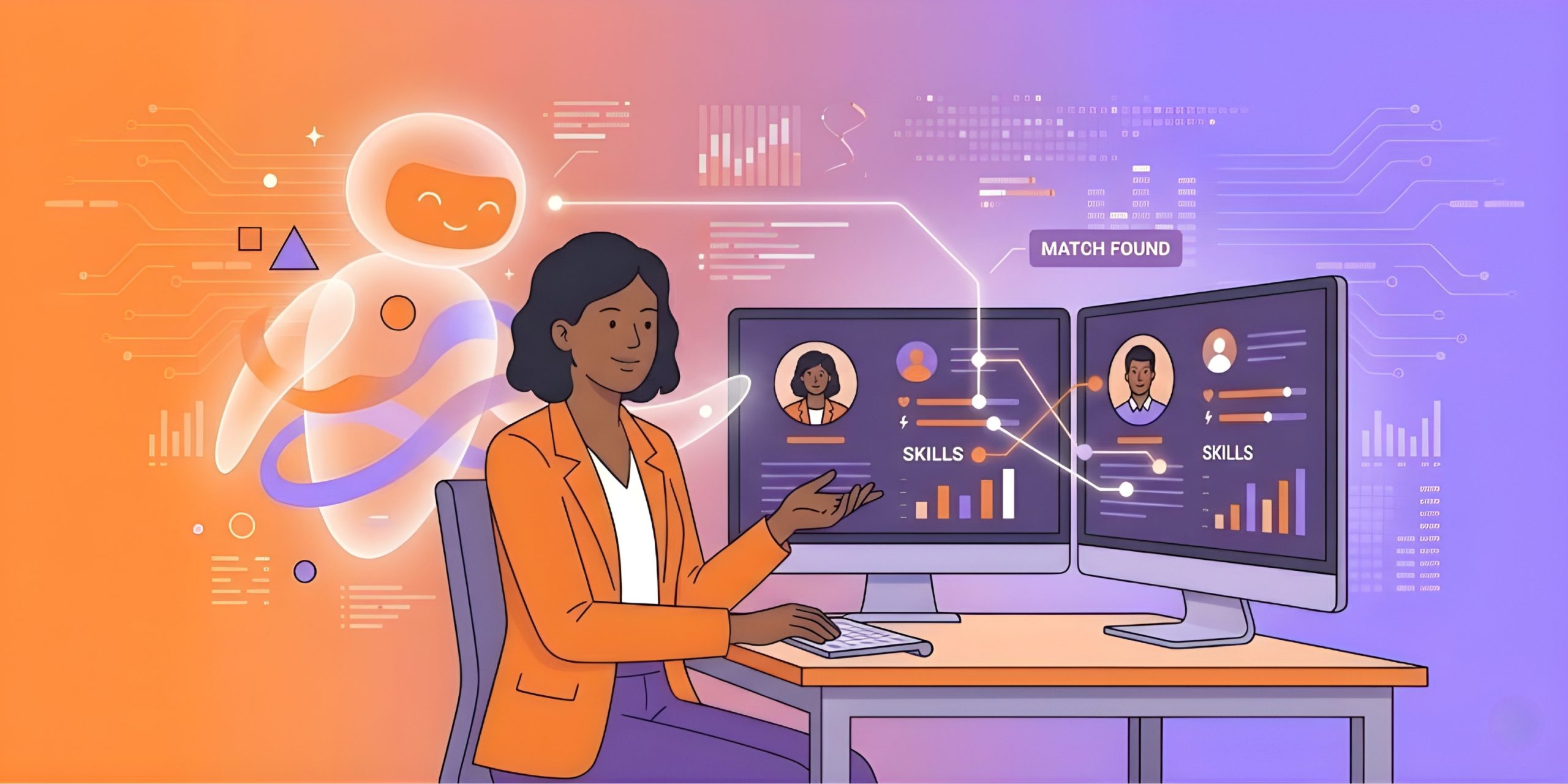
AI has revolutionized the contract to hire services landscape. Today, contract recruiters rely on AI tools to quickly review large numbers of resumes and spot candidates who closely match what a role needs. This is particularly useful when working contract to hire, as the recruiter needs to ensure the candidate is a fit for both the short-term task and a potential contract to direct hire transition.
AI also assists with the administrative side of hiring. For example, ensuring compliance in international markets is easier when you check Aqd contract registration through automated platforms that flag missing documentation.
These tools allow recruiters to focus on the human element: interviewing and selling the vision, while the machine handles the methods of recruitment data entry. Studies indicate that the global market for recruitment software could grow beyond $4 billion by 2032, with much of that growth linked to the use of AI tools.
Human vs AI Task Sorter
Conclusion
Knowing what a contract recruiter can help companies stay flexible as they grow. Whether you are dealing with a contract to hire staffing need or facing a sudden spike in open roles, these specialists step in when extra support is needed. Their mix of hands-on recruiting experience and smart tools helps teams keep up with demand without missing strong candidates.
If open roles are starting to slow your team down, it may be worth looking at short-term recruiting support. A contract professional can help you fill gaps faster and keep growth on track.