

TL;DR
- What questions might an interviewer ask for NP to focus on skills and care choices?
- They check if you’re competent, kind, reliable, and calm.
- Expect common nurse practitioner interview questions and scenario-based ones.
- Prepare by reviewing your work, key clinical knowledge, and clear answers.
Landing a job as a nurse practitioner can feel like walking into a maze blindfolded. You know your skills, but you don’t know what questions will come your way. That uncertainty makes many candidates feel nervous or unprepared.
This blog will walk you through precisely what questions might an interviewer ask for NP, show you common nurse practitioner interview questions (with sample answers), and introduce behavioral and scenario-based NP interview questions so you step into your next interview feeling confident and ready.
What Employers Look for in NP Interviews

Hiring leaders want nurse practitioners who bring strong clinical ability, clear communication, and good judgment to the job. The need for NPs is increasing quickly, with employment expected to grow by about 40% between 2024 and 2034, which is much faster than most careers. Employers look for someone they can trust to deliver safe care, work well with others, and support the patient community they serve.
Here are some qualities employers tend to look for
- Solid clinical skills and up-to-date knowledge of patient care protocols.
- Good patient communication and empathy mean explaining complex medical details in simple terms.
- Ability to work under pressure and make decisions when lives are involved.
- Teamwork and collaboration with doctors, nurses, and other staff.
- Professionalism, integrity, and reliability.
Because NPs often handle critical tasks such as ordering labs, prescribing treatments, and making diagnoses, interviewers want to trust that you can manage responsibilities safely.
Another factor: many institutions use a pre-screening process as part of the hiring process. This means your application might go through resume screening in recruiting staff, reference checks, or even basic phone interviews before you’re invited for the main interview. When you make it through this filter, the interview becomes your chance to show you’re more than just a good résumé.
Drag Traits From Here
High Priority in Interviews ✔
Nice to Have ✘
Common NP Interviews (with Example Answers)
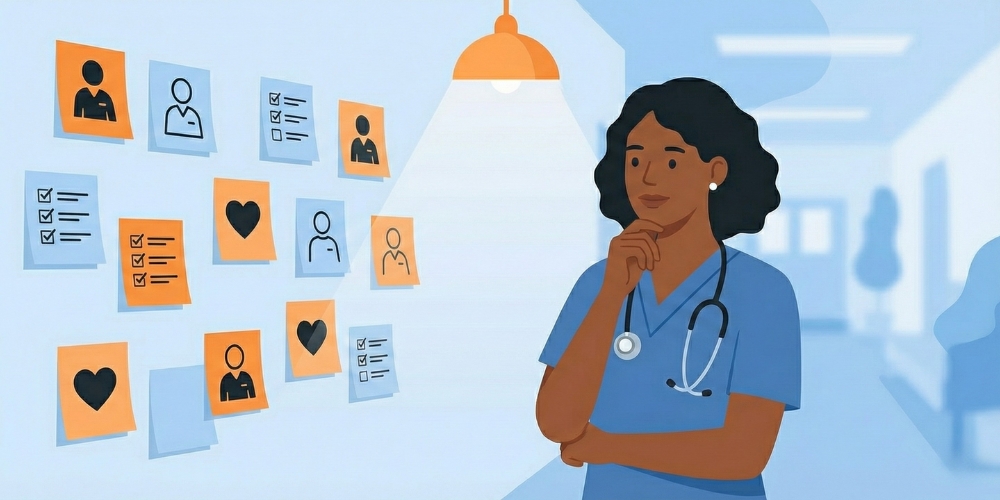
Here are some typical interview questions you might face, along with sample ideas on how to answer them:
What made you choose to become a Nurse Practitioner?
Answer idea: “I wanted to build on my nursing experience and take a more active role in diagnosing and managing patient care. Becoming a Nurse Practitioner lets me combine clinical skills with empathy to really help people who need attentive, compassionate care.”
Which patient population do you feel most comfortable working with?
Answer idea: “I’ve worked mostly with adults in primary care settings so far. I enjoy helping patients manage chronic illnesses and guiding them to healthier lifestyles. But I’m also open and willing to learn if this position involves pediatrics or geriatrics.”
How do you stay current with medical guidelines and best practices?
Answer idea: “I make time each week to read leading nursing journals or attend webinars. I also participate in peer-review groups and follow updates from professional organizations to ensure my care aligns with the latest evidence.”
What are your strengths and weaknesses as a clinician?
Answer idea (strength): “I build strong rapport with patients and help them feel comfortable opening up about their health.”
Answer idea (weakness): “I sometimes spend too much time preparing my notes before a visit, so I am learning to be more efficient while still staying well prepared.”
These questions and others similar are considered common nurse practitioner interview questions or interview questions for nurse practitioners because they help interviewers judge your motivation, mindset, and suitability for the role.
Build Your Answer: Common NP Interview Questions
Pick a question type, fill in each part, then create and copy your full answer.
Behavioral and Scenario-Based NP Interview Questions
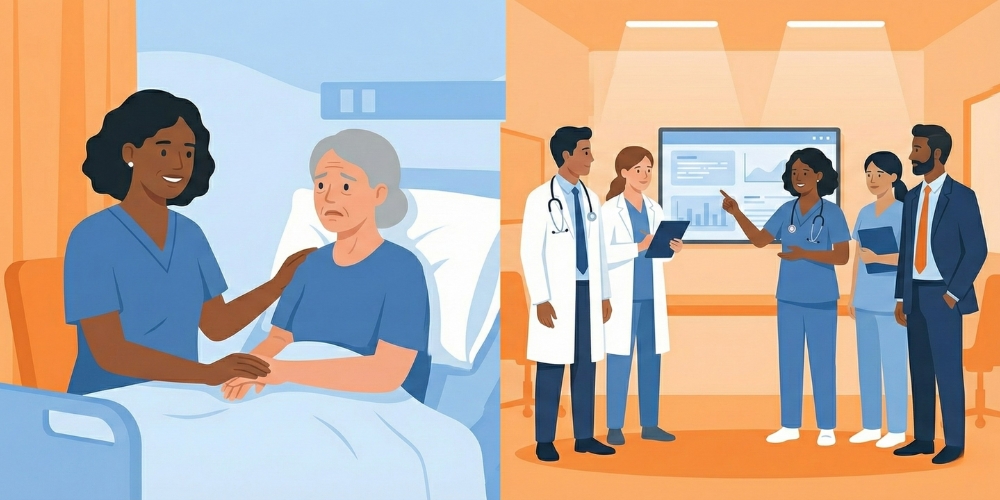
Smart interviewers often use real-life or hypothetical situations to test how you’d act under pressure or unexpected circumstances. These reveal soft skills that aren’t obvious on paper.
Here are examples of those kinds of questions, and how you might approach them:
Describe a time when you had to manage a difficult patient or family member. What did you do?
Answer idea: “I once had a patient who was anxious and upset because their lab results showed abnormal values. I remained steady, paid close attention to what they were worried about, broke the results down in clear language, and guided them through what would happen next. That helped reduce their anxiety, and we worked together to create a follow-up plan.”
How would you handle a situation where a colleague’s recommendation conflicts with yours?
Answer idea: “I would hear their side fully, explain my own thinking with respect to guidelines, and suggest we work together on a plan that supports the patient. If we still are not on the same page, I would reach out to a senior clinician so the patient remains safe.”
If you noticed a medication error or oversight in a patient’s chart just before prescribing, what would you do?
Answer idea: “I would stop right away and review the patient’s history, lab work, and current medications. If it turns out to be an actual mistake, I would fix it on the spot and speak with the doctor or pharmacist involved to keep the patient safe.”
You are working with fewer team members than normal, and the number of patients is higher than expected. How would you decide who to see first and still keep care safe?
Answer idea: “I start by sorting patients according to how serious their situation is. The ones who need immediate attention go first. For the rest, I make sure they have clear next steps, and I work with the team to keep everything running smoothly so care stays safe and steady.”
These scenario questions help interviewers see how you work under pressure, communicate with patients and colleagues, and uphold safety. Preparing answers for such questions is as crucial as knowing technical clinical facts.
Scenario Decision Puzzle: Behavioral NP Questions
Read the scenario, pick the response that feels most safe and professional, then check the feedback.
Clinical and Technical Questions
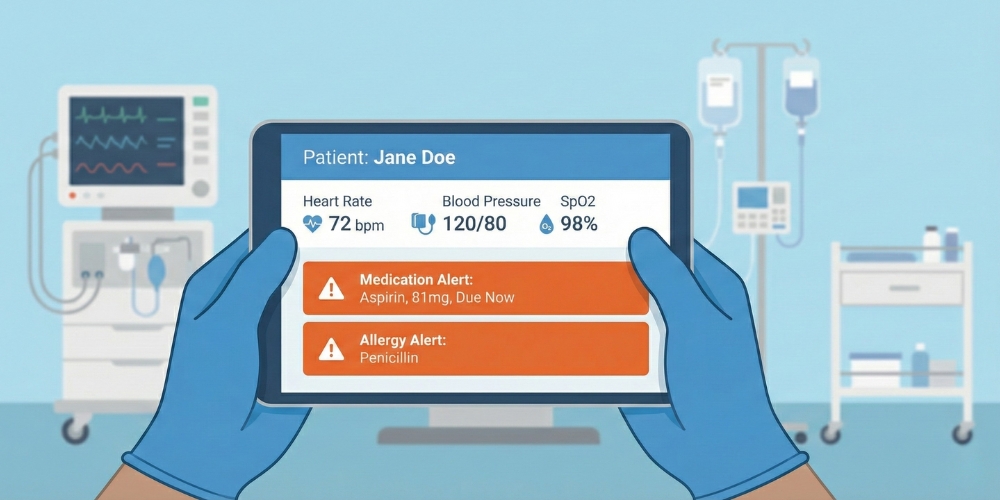
Interviewers must confirm you can deliver safe and effective care. That’s why they ask clinical and technical questions that relate to diagnostics, medication safety, and patient management. These may look different for specialties such as FNP interview questions for family practice roles or DNP interview questions when advanced research-driven care is expected.
Here are examples you can practice:
How do you decide which diagnostic test to order when symptoms are not clear?
Show you combine vital signs, history, assessment, and red-flag risks before ordering tests.
What is your process before you prescribe a medication?
A strong answer includes allergy checks, interactions, dosage verification, and patient education.
How do you handle triage during a busy shift?
Explain how you classify urgency and follow evidence-based triage standards.
Which EHR systems have you worked with, and how do you document to reduce errors?
Mention accurate charting, verifying orders, and real-time updates.
These clinical questions help employers confirm you are prepared for hands-on care, not just theory.
Rapid Skills Challenge: Clinical NP Quiz
Test your clinical and technical skills. Pick an answer and see instant feedback before moving to the next question.
How to Prepare for a Nurse Practitioner Interview
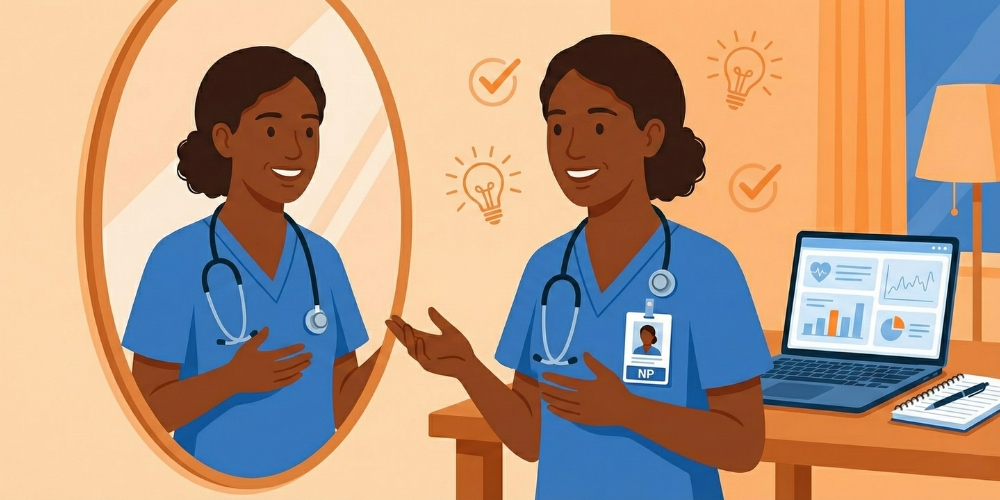
Preparing well can turn nerves into confidence. Once you’ve passed the screening interview questions in early rounds, the main interview is your chance to shine.
Simple prep plan:
- Review the most common nurse practitioner interview questions and practice speaking answers out loud.
- Refresh guidelines for common chronic conditions and emergency red flags.
- Study the organization’s patient population and mission.
- Prepare examples from past clinical responsibilities.
- Bring thoughtful nurse practitioner interview questions to ask at the end.
- Practice good posture, eye contact, and conversational clarity.
Research on candidate experience shows that poor communication is a significant problem in hiring. One recent analysis of job interview statistics reports that 54 percent of candidates have walked away from a job opportunity because of poor communication during the process. Confidence comes from preparation.
Also, remember interviewers appreciate it when you show interest in growth. If you are entering a program, you may also need questions about nursing program options, such as mentorship, rotations, or specialty support.
Interview Prep Checklist for NPs
- Review the job description and highlight key skills
- Learn about the clinic or hospital
- Refresh knowledge of common conditions
- Practice explaining treatments in simple language
- Prepare 3 examples that show teamwork and empathy
- Plan smart questions to ask the employer
- Choose a professional outfit
- Bring an extra copy of your resume
- Confirm interview time and location
- Arrive 10–15 minutes early
- Stay calm, breathe and listen carefully
Mistakes to Avoid
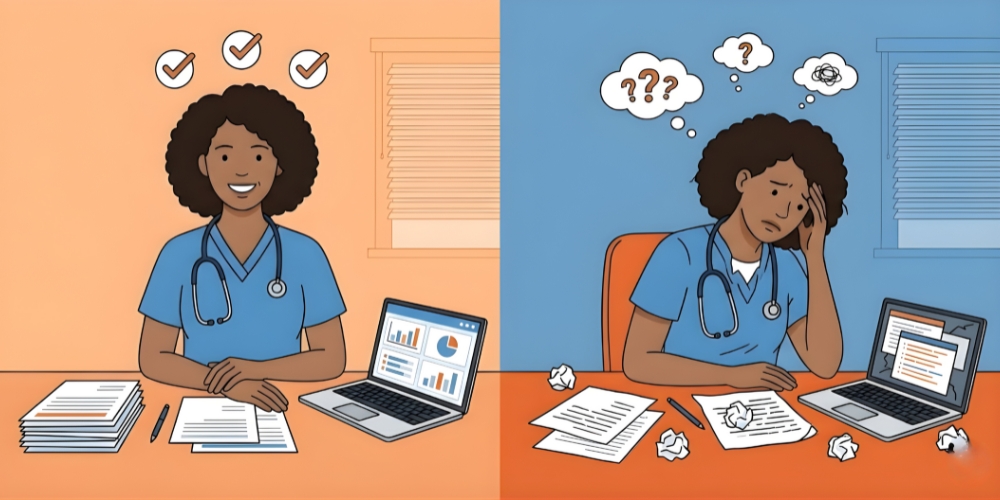
Even strong candidates slip up and make avoidable mistakes.
- Speaking only about yourself instead of patient outcomes.
- Giving vague answers with no examples.
- Criticizing previous workplaces.
- Forgetting to ask questions for nurse practitioners to ask at an interview shows you care about the patient care culture.
- Ignoring specialty expectations is risky because pediatrics or acute care requires different readiness.
- Not preparing questions to ask during a nurse practitioner interview about workflow, autonomy, or collaboration.
Healthcare jobs are fast-paced and trust-dependent. Interviews help employers understand whether you support teamwork, safety, and empathy. Preparing both clinical and interview questions for nurse practitioner topics proves you’re serious.
If you are exploring an academic-linked role, your interviewer may include a few questions to ask in a nurse practitioner interview about how well you adapt to continuing education and upskilling.
Red Flag Sorter: Mistakes to Avoid
Conclusion
You now have a clear idea of what questions might an interviewer ask for NP roles. From daily patient care to stressful decisions, employers want people who stay calm, care deeply, and think clearly. Prepare your stories, rehearse your answers, and bring curiosity with you. That helps you stand out and start your new role off on the right foot.
FAQs